This post is also available in:
“Eight fatalities in three days, plus generally high avalanche activity and numerous incidents involving people,” was the headline of the ÖKAS press release in February 2023. It continued: “In the space of just three days, numerous avalanches occurred in many of Austria’s federal states. Accidents involving people were most frequent in Tyrol and Vorarlberg, with eight fatalities during this period in the evaluations of the Alpine Accident Database of the Österreichische Kuratorium für Alpine Sicherheit (ÖKAS) and the Alpine Police. It is noticeable that the number of incidents and fatalities is significantly higher in a few short periods of winter than in other periods. Experts refer to this phenomenon as ‘avalanche seasons’.” An analyse:berg editor then told the young authors of this press release that the term “avalanche season” was coined by his former mountain guide training manager and was all the more pleased when he – namely Klaus Hoi – got in touch.
In conversation:
Klaus Hoi
Interview:
Peter Plattner
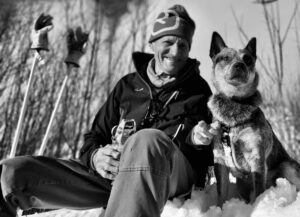
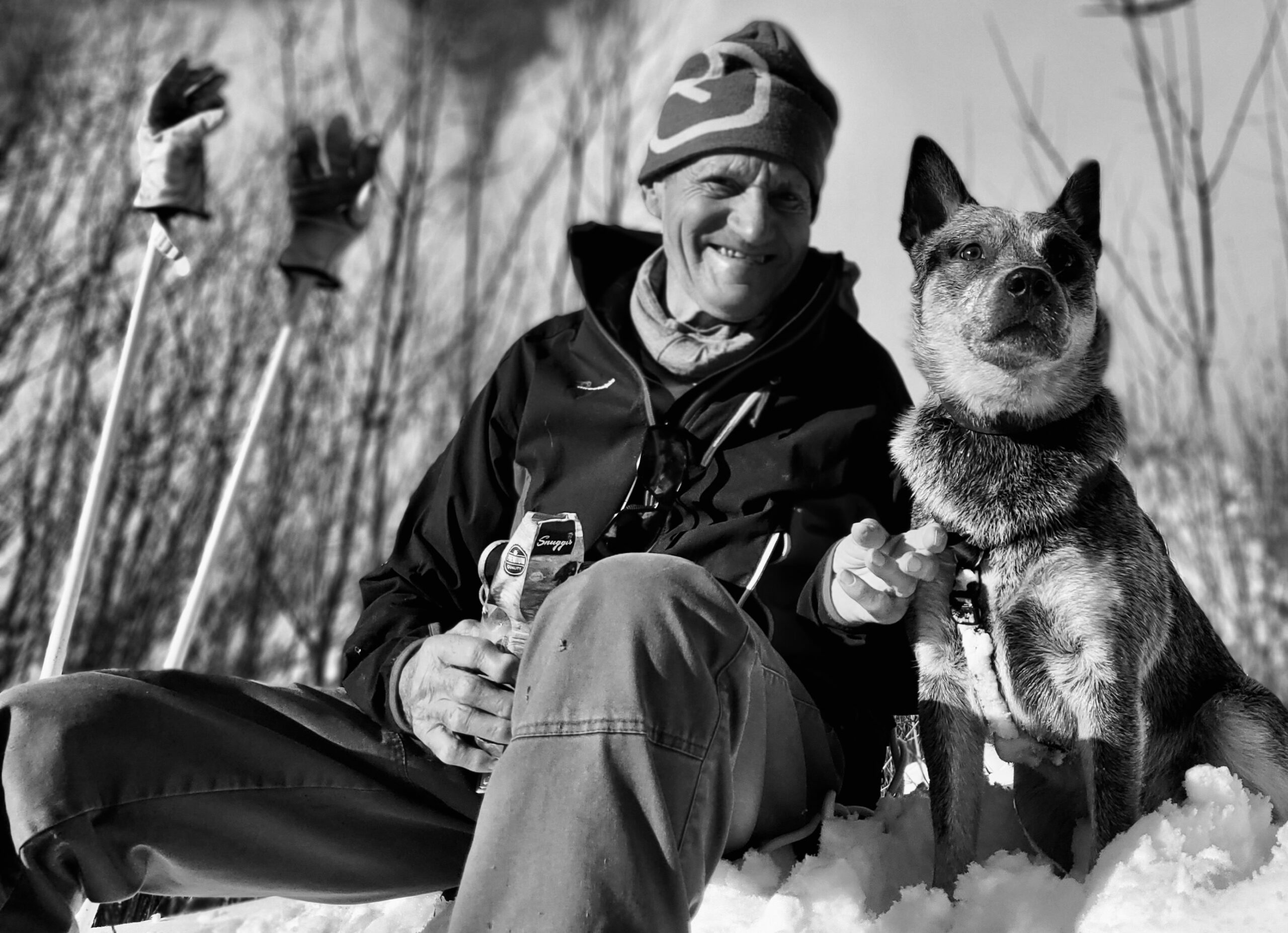
↑ Klaus Hoi and his Australian Cattle Dog Fritzi in winter 2023
Photo: argonaut.pro
E-mail to ÖKAS
I welcome the press release issued by the Österreichische Kuratorium für Alpine Sicherheit on February 7, 2023 and take this as an opportunity to make a personal statement on the buzzword “avalanche season”:
I was first appointed to the Austrian mountain and ski guide training program in 1965 and worked there until 1996. The practice-oriented training initially consisted of three courses: Summer, ice and ski guide training. After 1950, the rise of alpine tourism in the Alpine countries repeatedly led to dramatic avalanche accidents, also involving mountain guides. I soon realized that winter training had to become more important and that mountain and ski guides had to be better prepared for the demanding winter work. Unfortunately, it was not until 1978 that I succeeded in setting up a second winter avalanche course. During this avalanche course in January, the participants were given the homework task of compiling an avalanche accident report including a weather report from their local area and to give a presentation on it at the ski guide course the following year. This provided us with complete information about accidents throughout Austria during our training. This material can be compared with today’s “Seasonal Report of the Austrian Avalanche Warning Services”.
The frequency of accidents in the pre-winter snow cover with certain temperature gradients and physical conditions was striking. We referred to this development as the “preliminary stage to the avalanche season”, which suddenly developed into a particularly dangerous time for accidents when the weather changed (snowfall and wind)! I tried to sensitize the mountain and ski guides to this dangerous phase and encourage them to exercise particular caution during these highly volatile days.
In addition, this topic was successfully passed on to an academically educated group of participants during my work as an instructor in the Austrian Alpine Physician Training Program from 1992 to 2017 in a total of 160 winter courses with 7,680 participants. Unfortunately, however, I have not yet found any advocacy or approval for this topic from either the committees of the Austrian Avalanche Warning Services or avalanche experts. The only exception was Peter Höller (BWF, Department of Natural Hazards), who supported me in this opinion and proved this phenomenon with his statistical work on avalanche times.
As climatic changes and the associated changes in weather patterns are expected to lead to an increase in avalanche conditions in the future, a standardized language for avalanche warnings should be used. Now that avalanche warning has reached its limits – “We can’t warn any more.” (Patrick Nairz, LWD-Tirol) – and the committees involved in the press release are interested in a widespread warning for all those involved in skiing, especially freeriders and off-piste skiers, it is high time to use a new catchphrase for the most accident-prone days of winter! Together, we could succeed in explaining the physical correlations for the development of an avalanche in a generally understandable way – even for inexperienced skiers.
Thank you for your interest and best regards,
Klaus Hoi, February 9, 2023
“I tried to sensitize the mountain and ski guides to this dangerous phase and encourage them to exercise particular restraint during these highly volatile days.”
To better understand what Klaus means by this term, he sent us three texts. Let’s start chronologically with his assessment of the winter of 2009/10: