This post is also available in:
You can find this article in the summer 2025 issue of the ÖKAS trade magazine analyse:berg. Become a subscriber to analyse:berg. You will receive the magazine conveniently delivered to your home as soon as it is published and support the work of ÖKAS at the same time.
All reported accidents in alpine terrain in Austria are recorded by the Alpine Police and recorded regardless of the degree of injury. All fatal accidents are fully documented. Accidents (especially with minor injury patterns) that are not reported via emergency call etc. cannot be recorded. In the organized ski area – i.e. in the area of ski slopes, ski routes and cross-country ski trails – accidents are only recorded by the Alpine Police if there is suspicion of third-party fault or if the accident ended fatally for one of the parties involved.
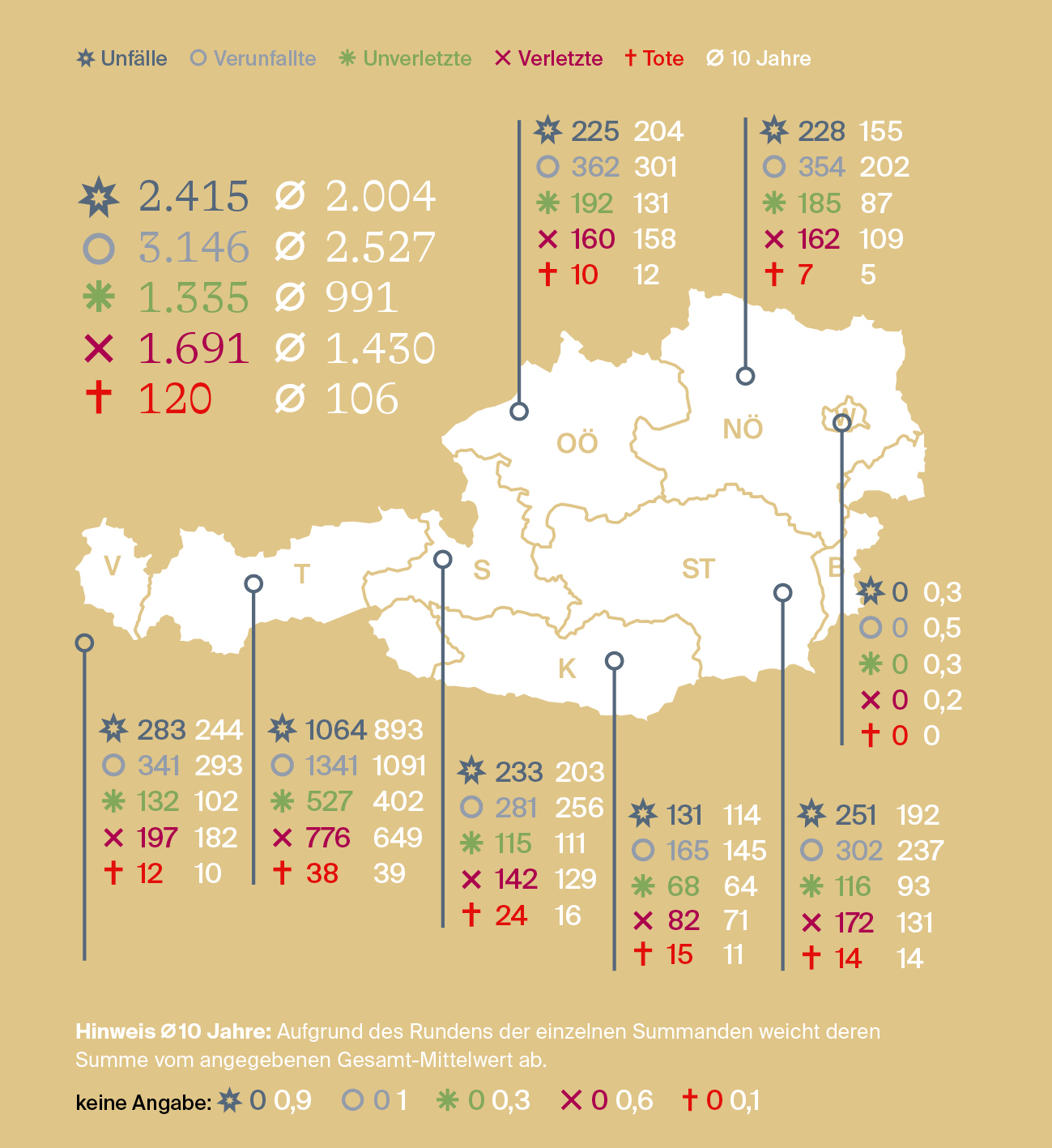
Below you will find an overview of all alpine accidents in Austria in the period under review from November 1, 2023 to October 31, 2024. It covers the classic summer disciplines of hiking/mountaineering, climbing, via ferrata, mountaineering, mountain biking, white water sports, caving accidents, aviation accidents and ropes courses as well as the classic winter disciplines of ski touring (incl. snowboard and snowshoe tours), variant (unsecured ski area), piste/ski route (secured ski area), lift accidents, cross-country skiing, tobogganing and ice climbing. There are also non-mountain sports disciplines that appear in the accident database, such as accidents at work (in alpine terrain), hunting, road traffic, suicide and other.
Further general information can be found on the “Alpine accident statistics” page . The symbols used in the following graphics are explained in the legend.
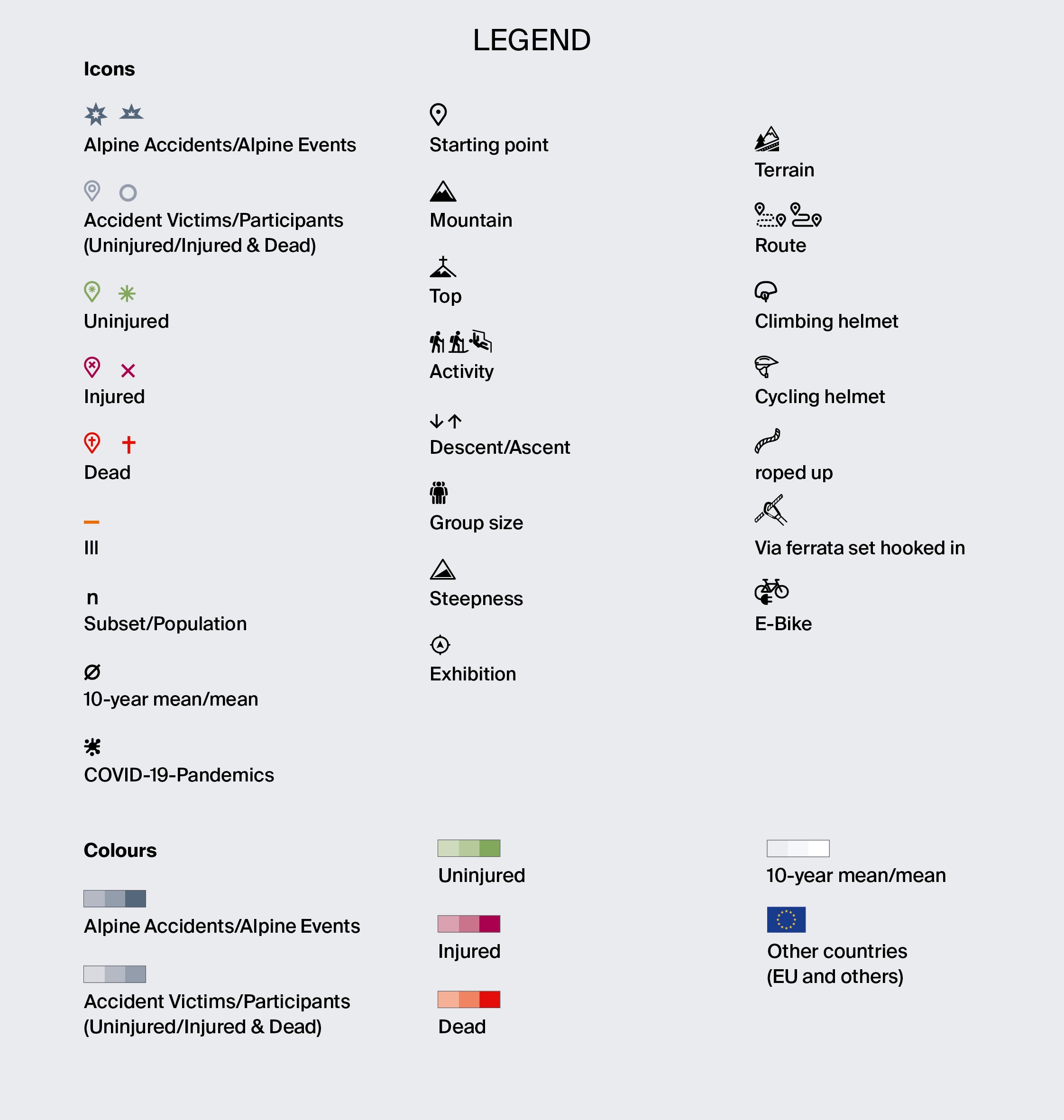
Legend of the symbols used
Overview of alpine accidents in Austria
While the number of injured and uninjured people has fallen compared to the previous year – but is still above the 10-year average – the number of fatalities is higher than ever before at 303. Hikers/mountaineers are mainly responsible for this, with 120 deaths, well above the 10-year average of 106.
For the first time, we have created a chart at the top of page 15 that shows the most frequent fatal causes of accidents across all disciplines in the period under review and over a 10-year period. Unsurprisingly, cardiovascular disorders are in first place; although the 84 fatalities in the period under review are above the average of 71, there have been twice as many fatalities here in the last 10 years. Not so with crashes: at 58 (10-year average 41), there were more deaths here than ever before. Incidentally, if you add up the number of fatal accidents caused by falls and falls/trips/slips (47 in the period under review and 48 in the 10-year average), then this is the number one cause of death in the Alps in Austria and puts the cardiovascular issue into perspective somewhat.
As usual, we also evaluate accidents in all disciplines according to gender, although this does not really seem relevant to us. Other criteria such as level of training, experience, etc. would be much more helpful from an accident prevention perspective. In fact, we fail to interpret this evaluation: across all disciplines, an average of 4,465 men and 3,370 women are injured over a 10-year period, which could correspond to the ratio of male to female mountaineers (in some disciplines, such as hiking, more women have accidents than men). This gender ratio is completely different for fatal accidents: on a 10-year average, 243 men and 42 women. If you have a valid explanation for this that goes beyond platitudinous clichés, please share it with us …
Query date
This overview of all mountain sports disciplines in the period under review was retrieved and updated from the ÖKAS database on July 8 and 9, 2025.
COVID-19 pandemic
The first Covid-19 virus infections were registered in Austria on February 25, 2020, followed by lockdowns from March to April 2020 and from September 2020 to February 2021, which are also reflected in the figures for some mountain sports disciplines as statistical “outliers” during these periods.
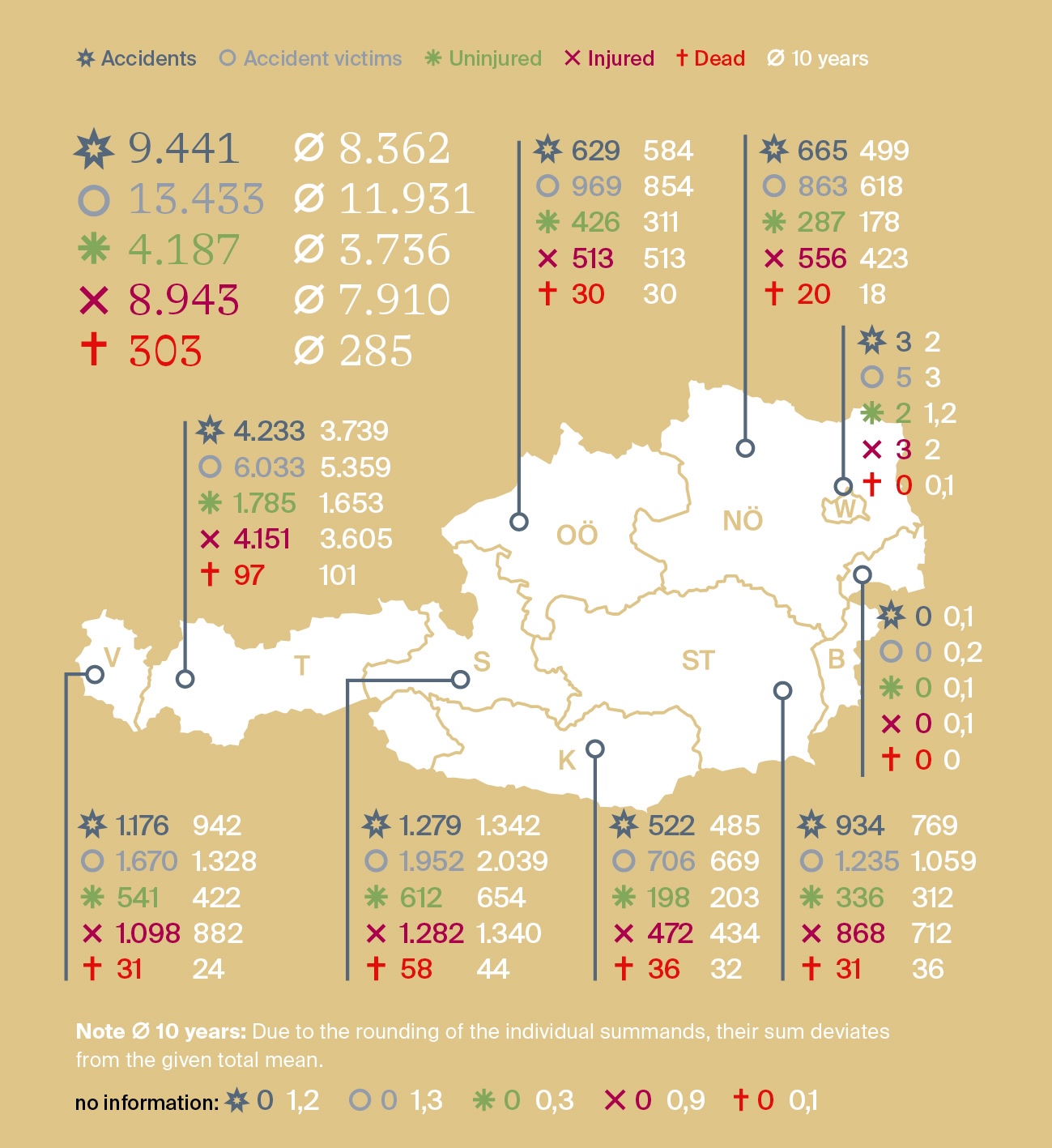
Fig. 1: All alpine accidents (with uninjured, injured & fatalities) as well as accidents, uninjured, injured and fatalities by federal state in the 10-year average and in the period under review (Austria from 01.11.2023 to 31.10.2024).
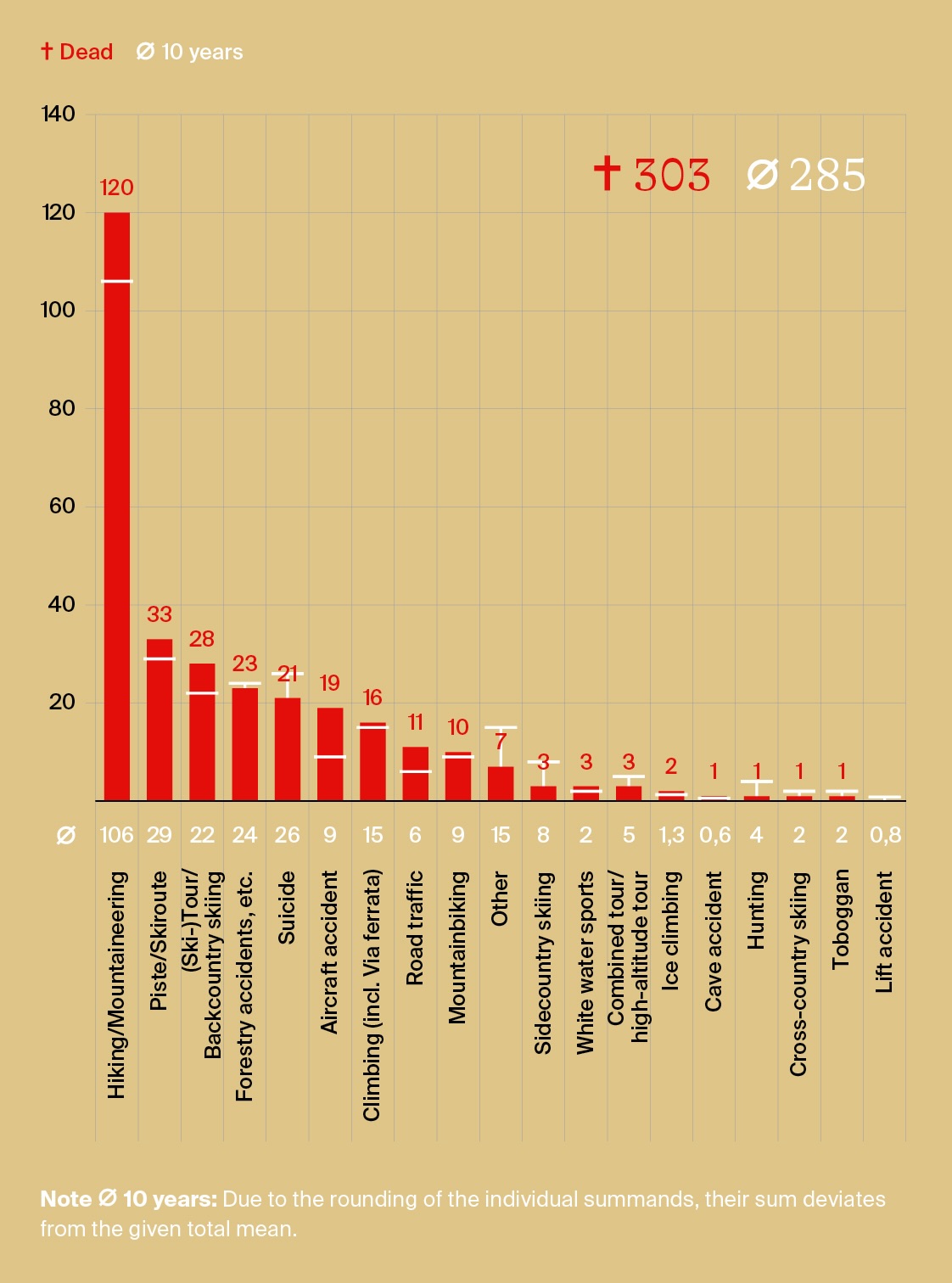
Fig. 2: Alpine fatalities by discipline in the 10-year average and in the period under review (Austria from 01.11.2023 to 31.10.2024)
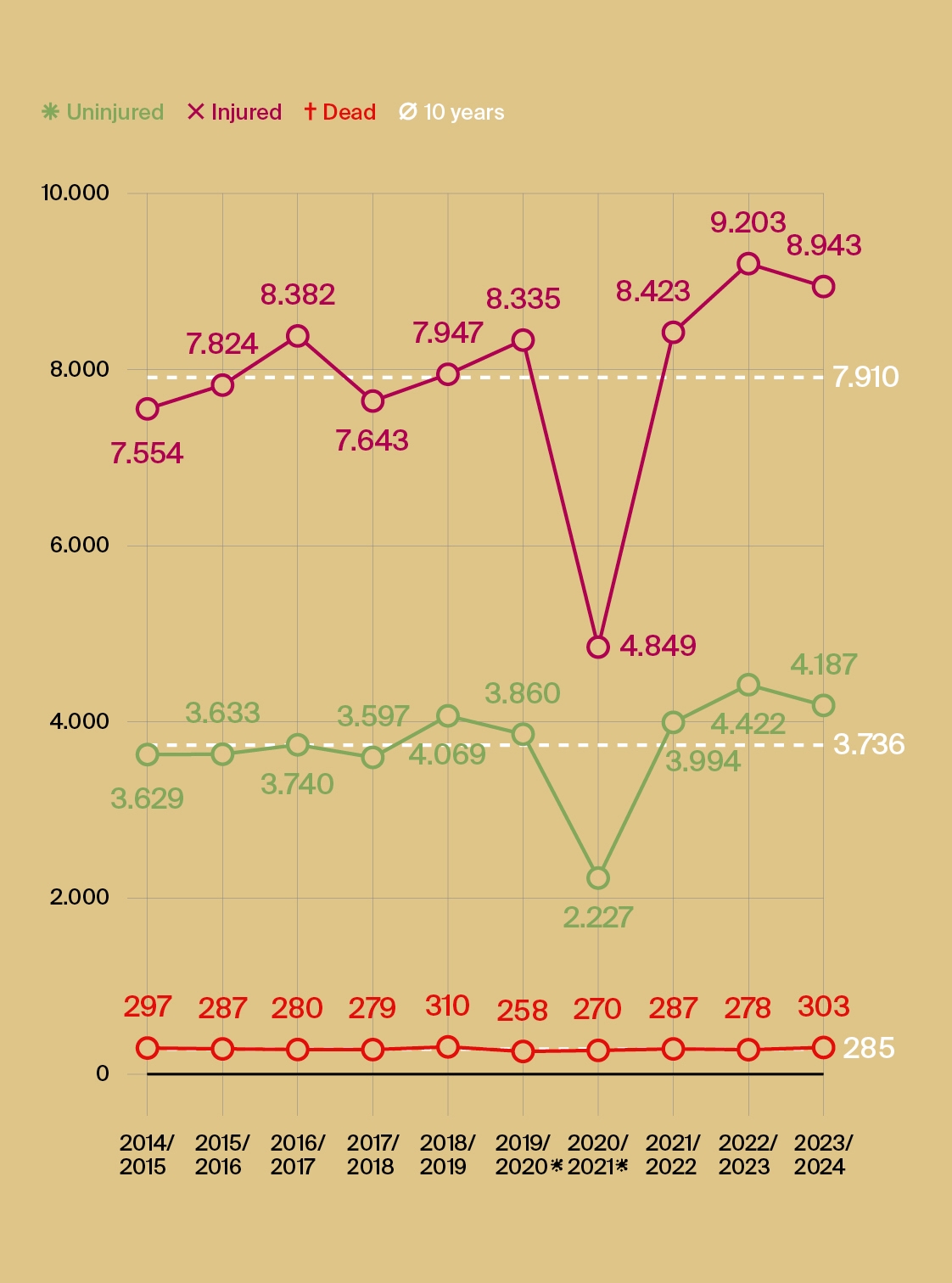
Fig. 3: Uninjured, injured and dead people involved in alpine accidents in the last 10 years and on average in Austria.
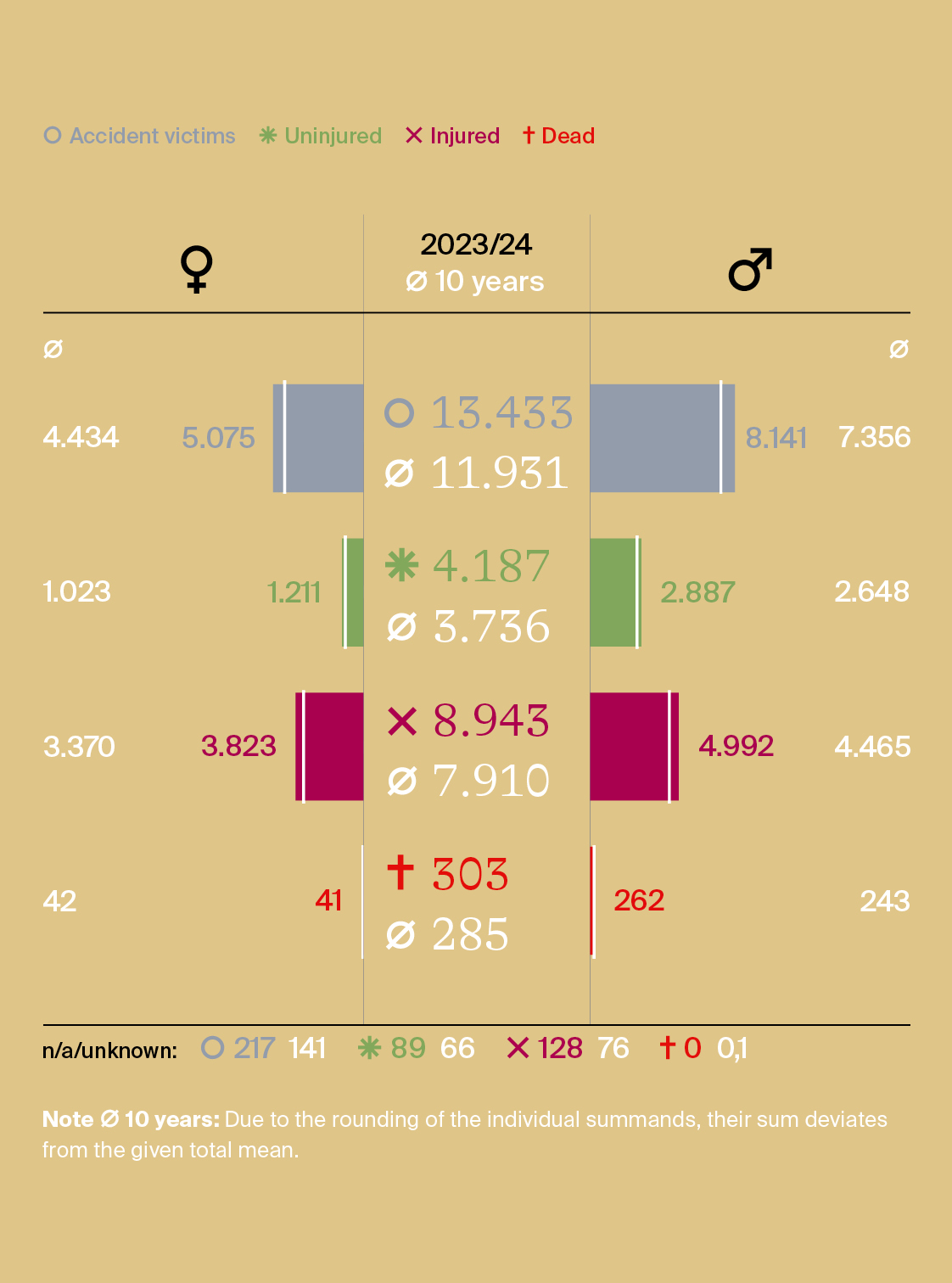
Fig. 4: Accident victims (uninjured, injured & fatalities) by gender in the 10-year average and in the period under review (Austria from 01.11.2023 to 31.10.2024)