This post is also available in:
Two Fatal Climbing Accidents Involving Sauschwänze — Stephan Binder and Andreas Würtele report on incidents at Peilstein and Martinswand and provide an opportunity to discuss what requires special attention when using Sauschwänze.
The so-called “Sauschwanz” is found primarily in sport climbing areas. Improper use of this device can have fatal consequences, and several serious—including fatal—accidents have already occurred in the past. In a conversation with Stephan Binder of the Alpine Police, we received information about a climbing accident on the Peilstein that immediately brought to mind a fall that occurred years ago on the Martinswand. Andreas Würtele investigated that accident at the time and contributes his expert opinion as a specialist and route setter to this article.
Rappelling Accident on the Peilstein
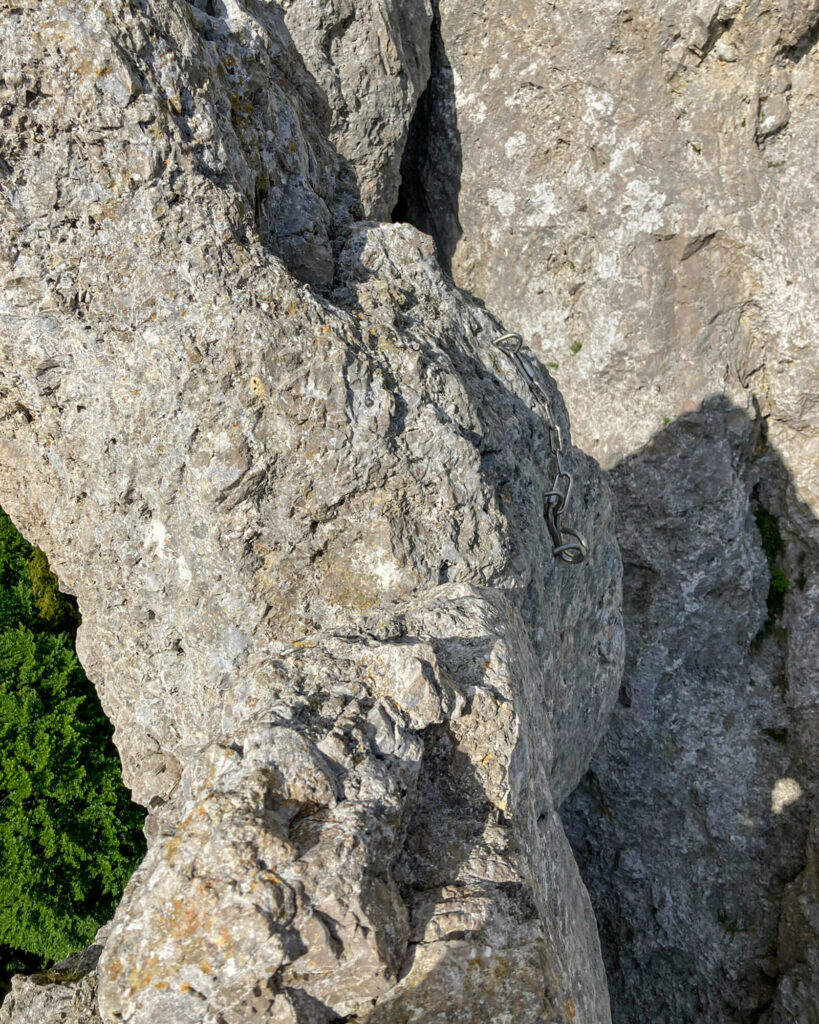
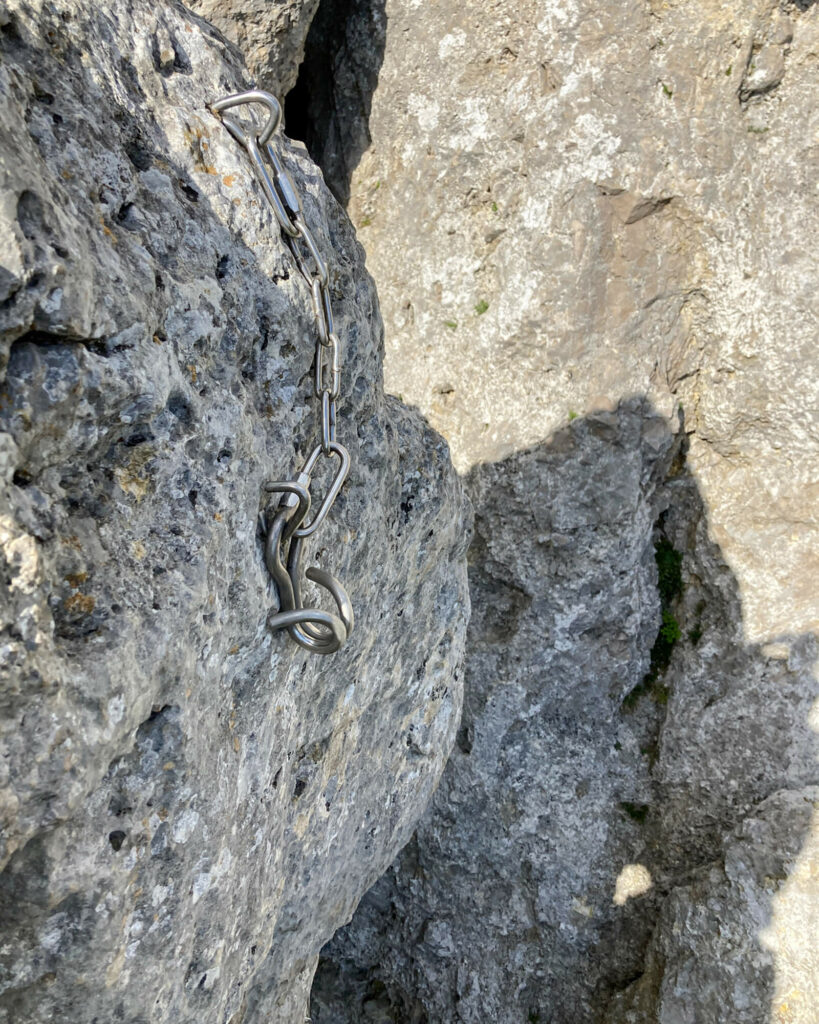
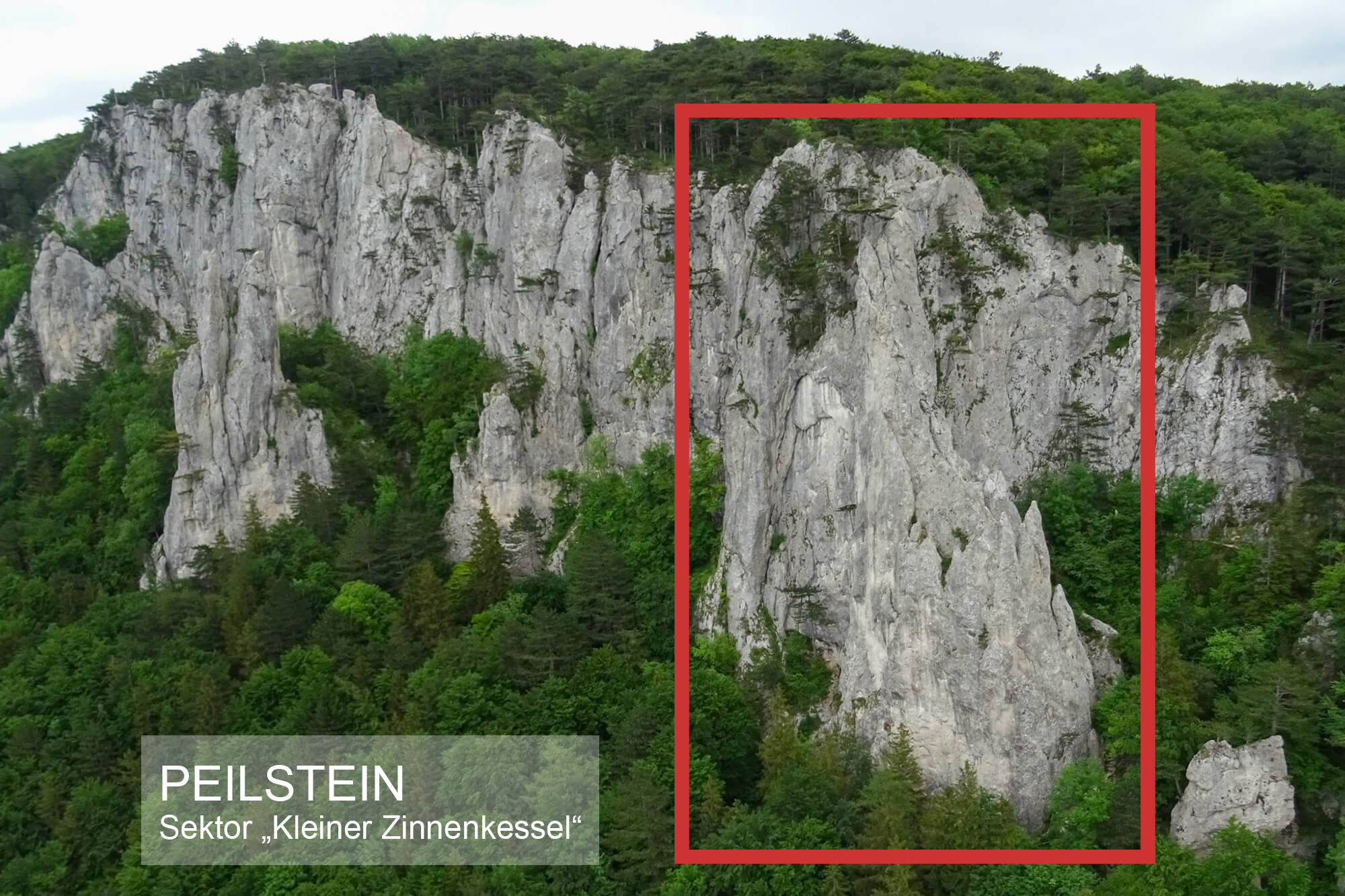
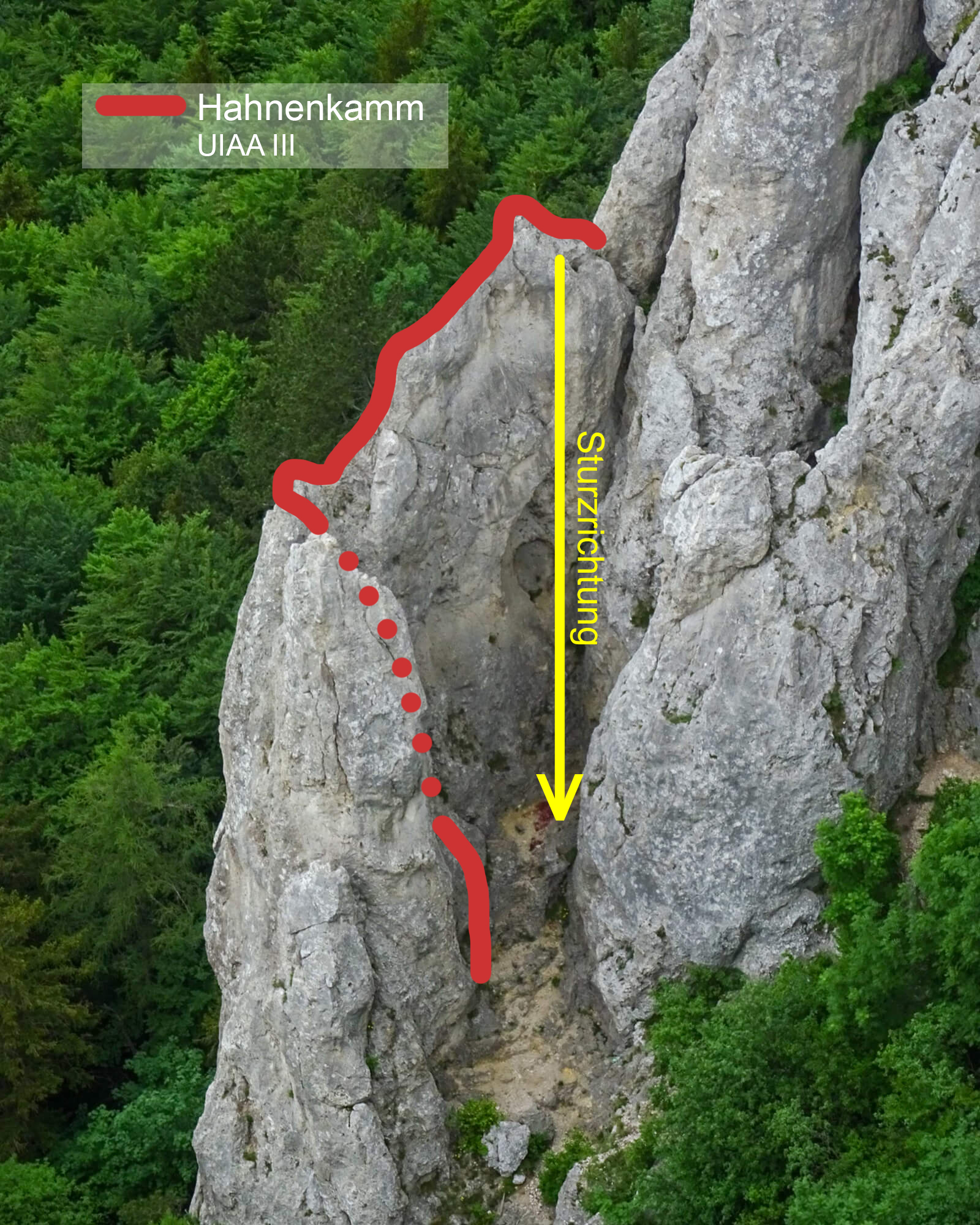
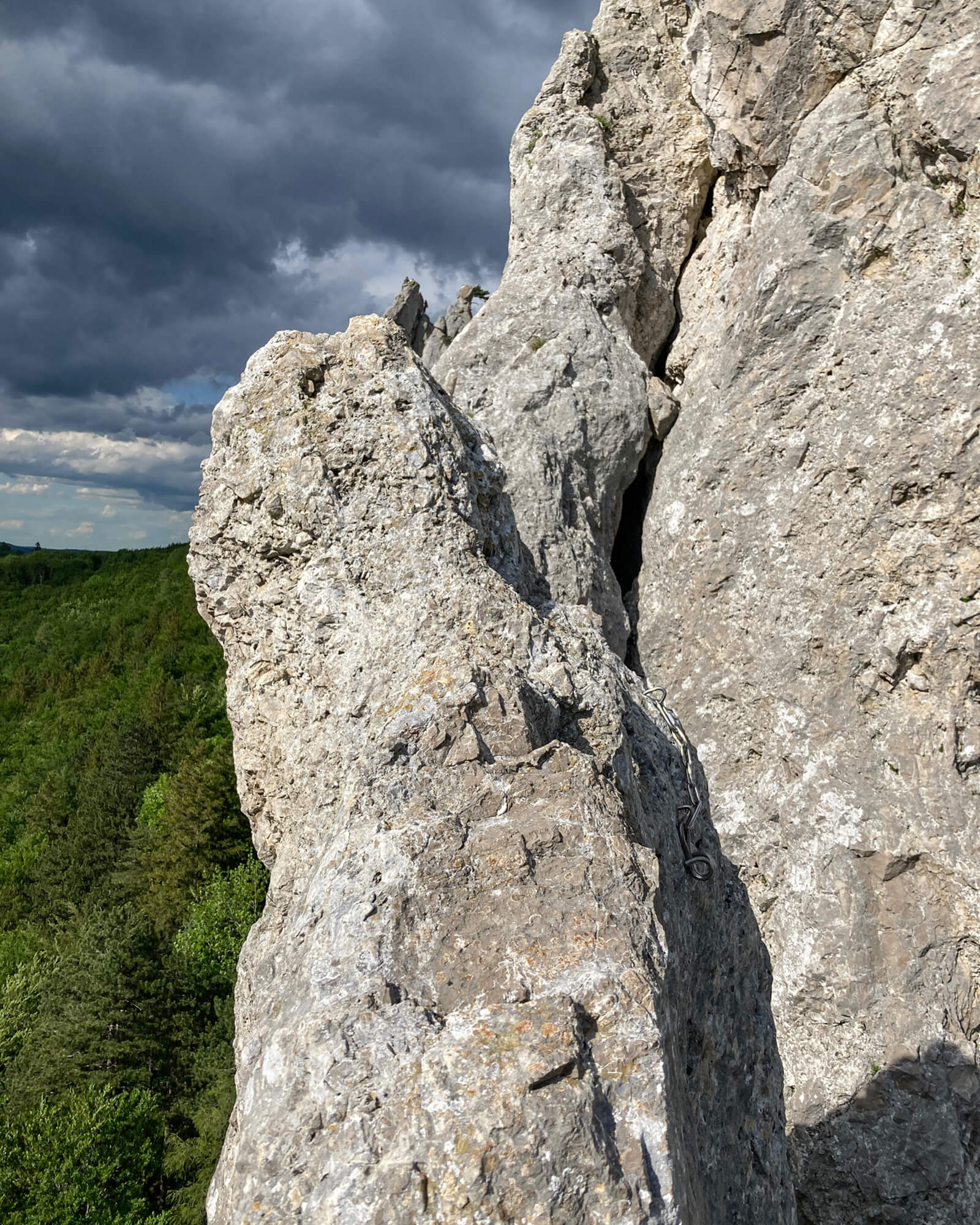
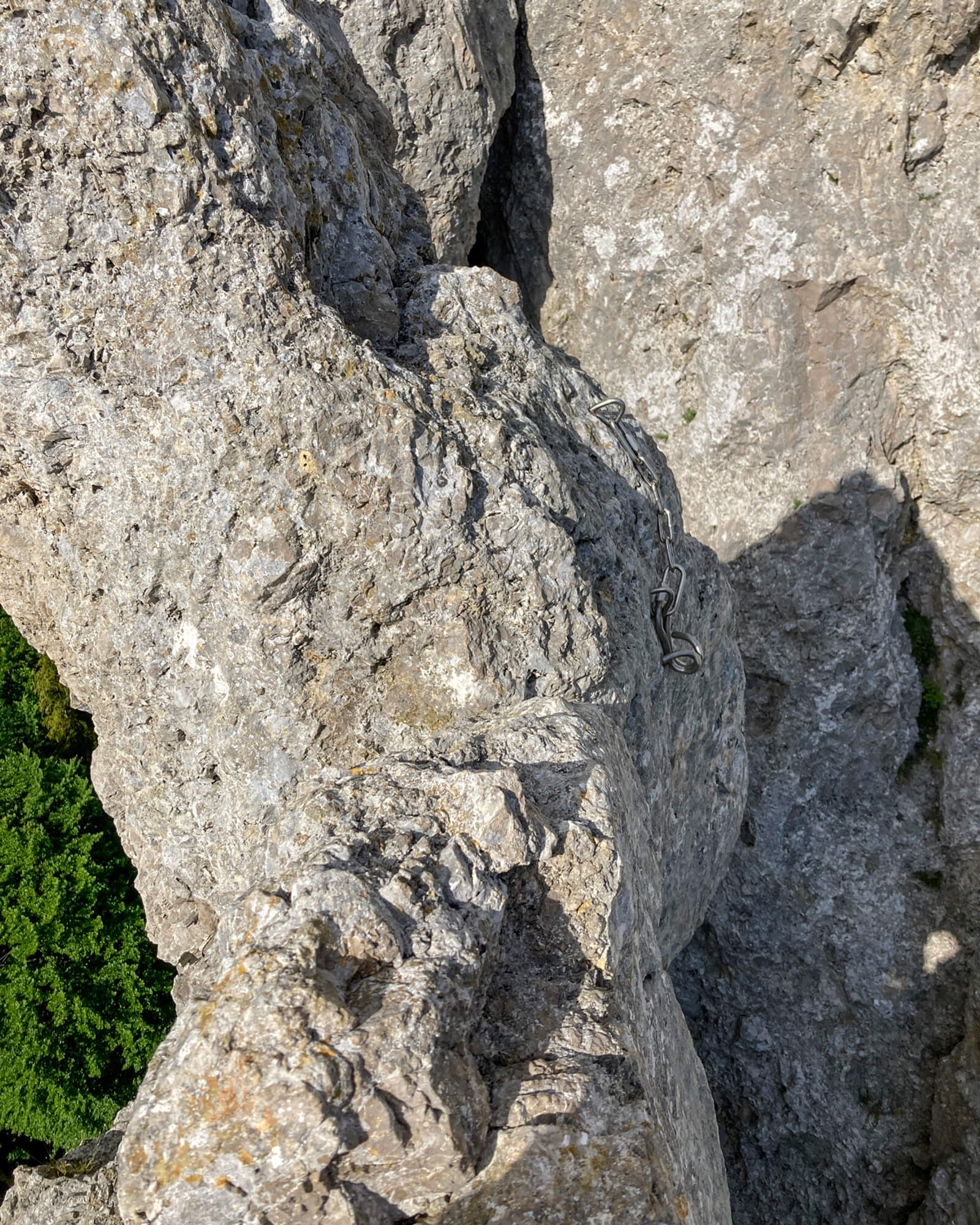
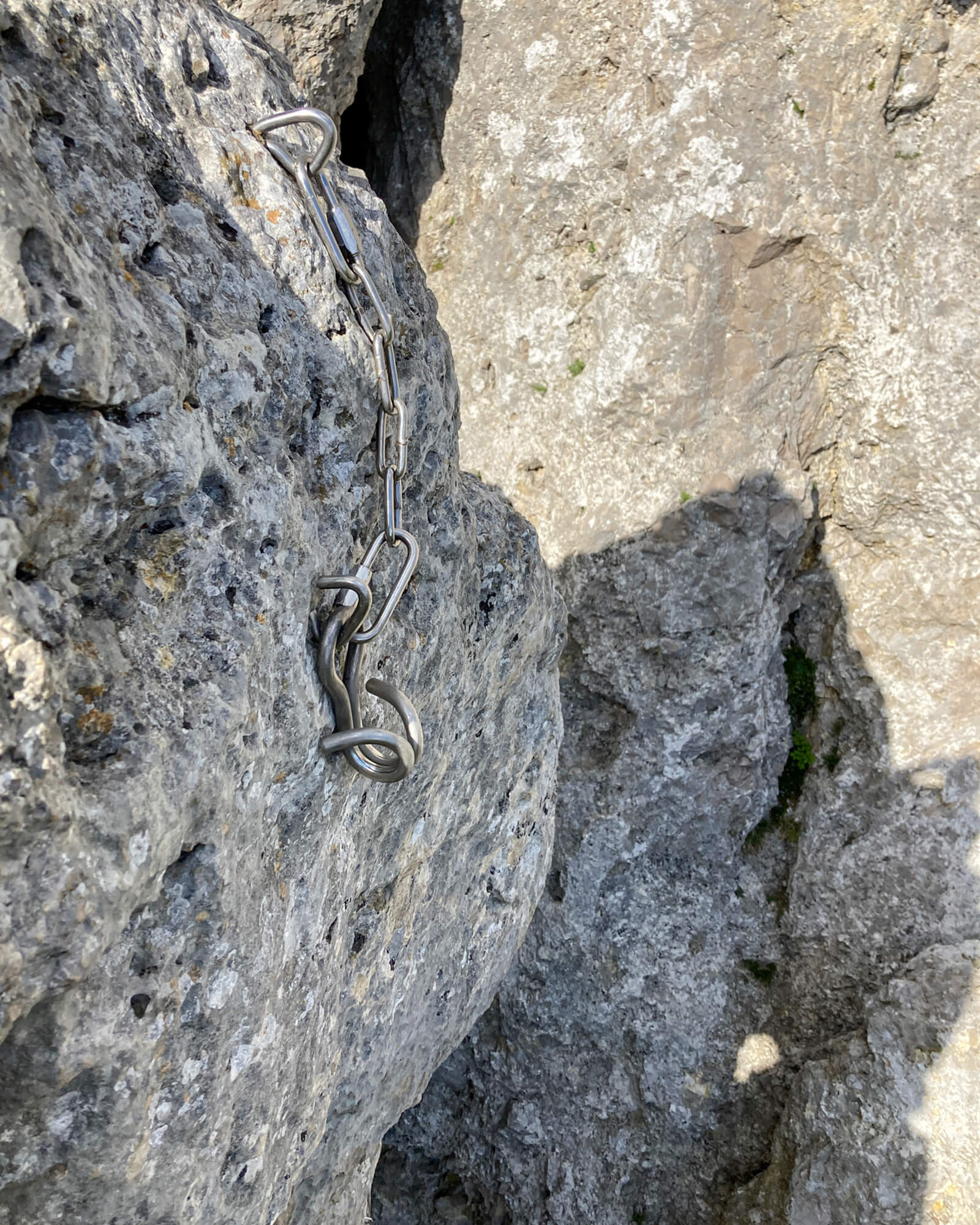
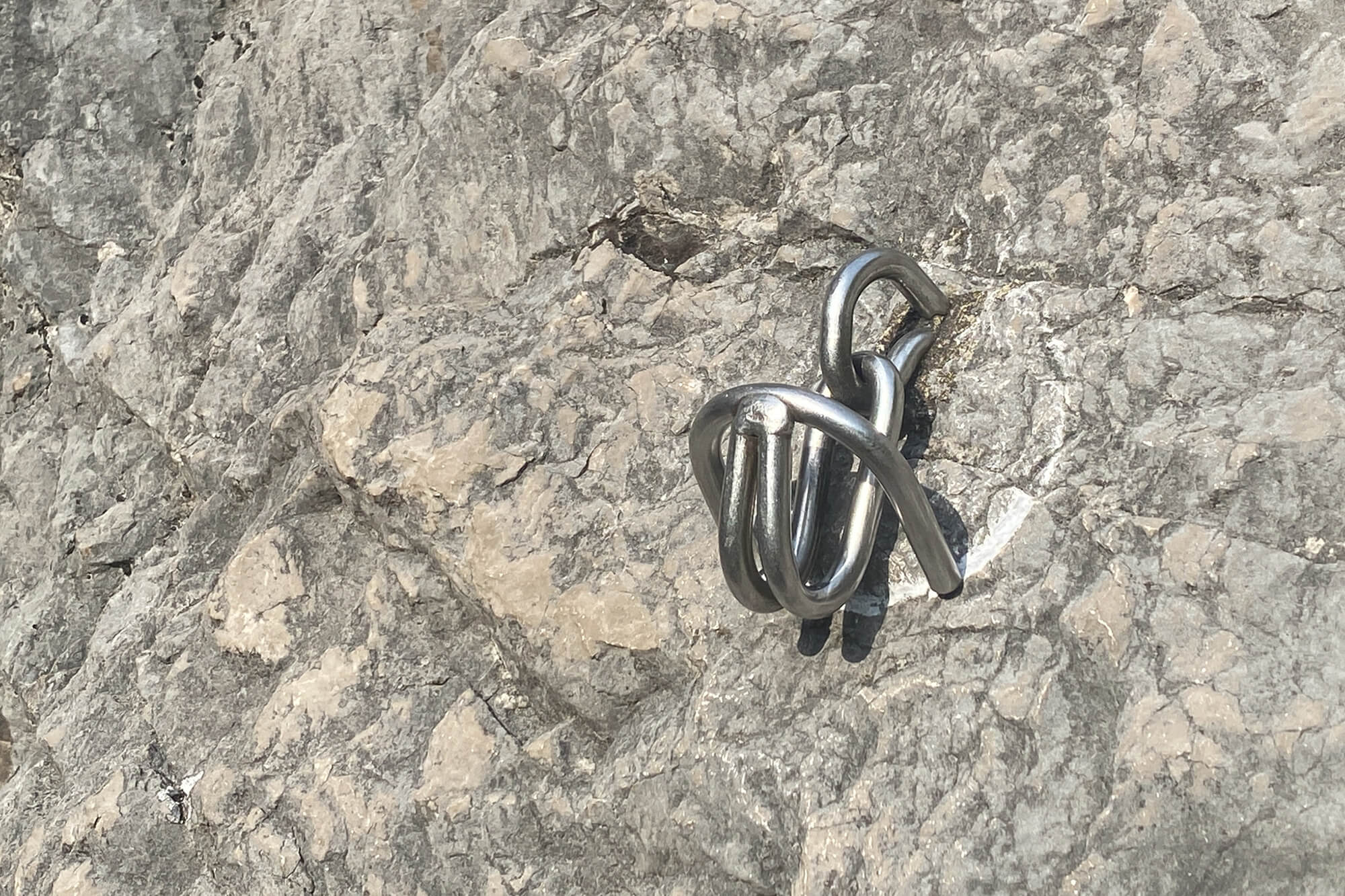
On May 28, 2022 , two climbers who were friends began climbing the Hahnenkamm route (UIAA III, 30 m) in the Peilstein climbing area, in the Kleiner Zinnenkessel sector. They climbed along the ridge to the belay station of the neighboring route and secured themselves there using a sling and a screw-lock carabiner each. The belay station consisted of two standardized adhesive bolts connected by a chain. Attached to the lower bolt (and connected to the chain) was also a so-called “Sauschwanz”—a device screwed into the rock with the open end facing the rock face, used for belaying and lowering climbers on a top rope—which was permanently attached there.
After the rope had been properly clipped in for rappelling and preparations had been made for the first climber to rappel, he moved from the ridge to the rappelling position. During this maneuver, the rope came loose from the Sauschwanz, and since the self-belay had already been unclipped, he fell.
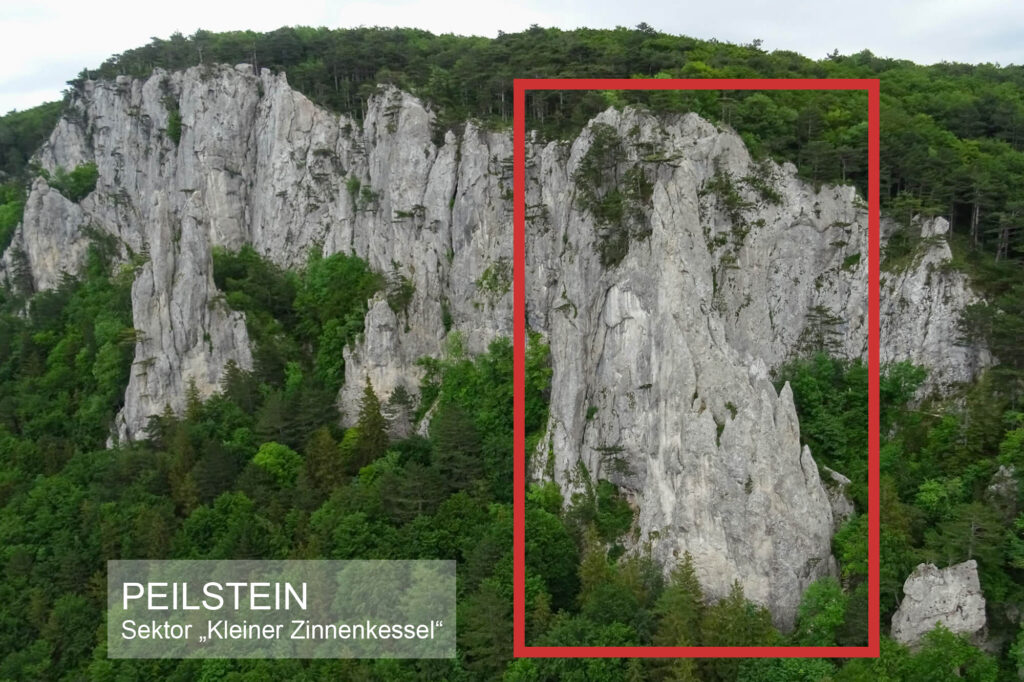
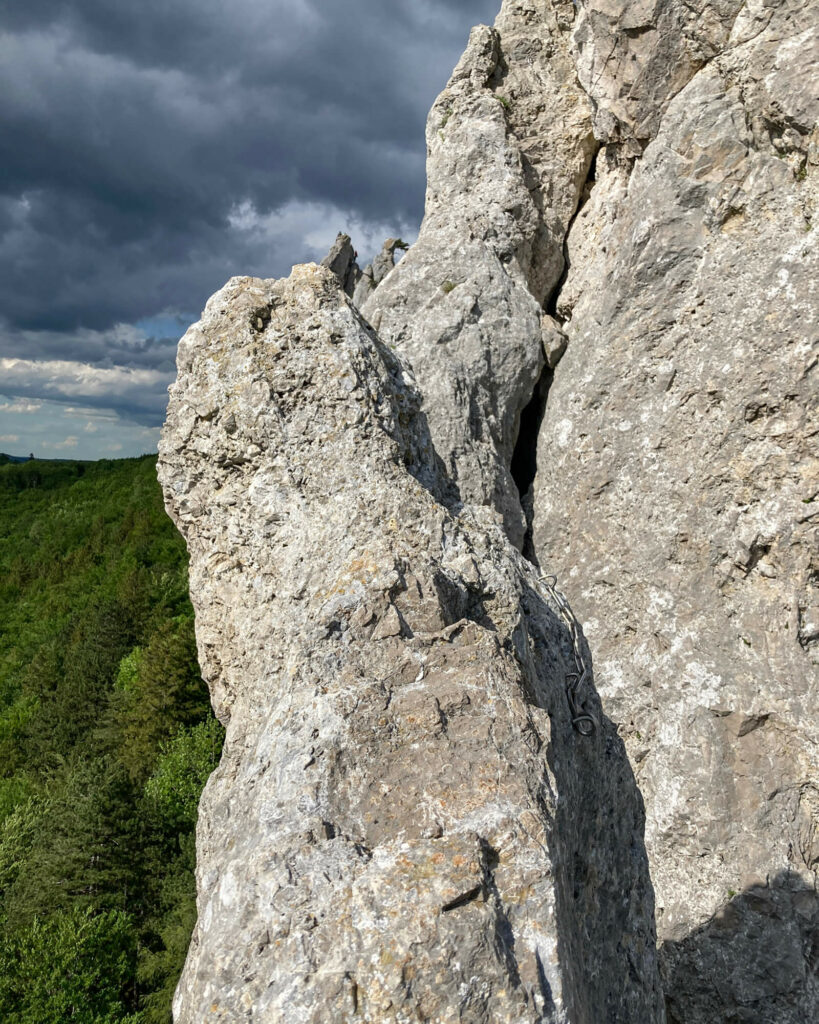
Overview photos of Peilstein. Click on an individual photo for details.
Photos from the route and the belay station. Click on an individual photo for details.
The Consequence
The fall resulted in the climber’s immediate death. Despite rapid resuscitation efforts by other climbers, the emergency medical team, which arrived shortly thereafter, could only confirm the victim’s death.
Parallel
A few years ago, a similar accident occurred on the Martinswand near Innsbruck. An investigation into the causes revealed that certain safety risks exist when using Sauschwänze. Designed as a deflection hook, the Sauschwanz is an open-top system that requires the rope to be correctly threaded through it and subsequently loaded downward. If the rope is moved upward over the Sauschwanz, it can become disengaged. This danger must be taken into account, especially when the belay station with the Sauschwanz is positioned below the climber’s tie-in point.
Various sources of error and the rope coming off the hook in the Sauschwanz system.
Technical Background
The Sauschwanz System
The Sauschwanz is used as an anchor point in many climbing areas.
Safety Guidelines and Tips for Climbers
Sauschwänze are primarily installed as belay stations in climbing gardens or—increasingly rarely—on rappelling routes. Users should observe the following safety instructions and usage tips:
- Make sure the tie-in point is not higher than the pig’s tail.
- Attach the belay device directly to the bolt and, if the position is unfavorable, extend it so that the tie-in point is lower.
- Secure the rope with a quickdraw attached to the bolt, and do not unclip it until you have reached the final rappelling position.
- During the partner check, pay attention to the rope’s path and ensure that the load is distributed correctly.
- When belaying, stop climbing before reaching the belay station.
- Do not use it solely as a top-rope anchor; if necessary, add a redundant anchor at the last belay point below it.
- When using it repeatedly for top-rope belaying, use your own carabiner with a locking gate.
- Be aware of signs of wear—these occur more quickly, especially with frequent top-rope climbing, and can lead to fraying and weakening of the material. This is a general guideline.
Redundant systems. Click on each image for details.
Information and safety guidelines for course setters:
- Position belay points in climbing areas so that they cannot be climbed over—or can only be climbed over with difficulty.
- When selecting anchor points for rappelling, choose a position such that there is space for at least two people below the anchor point and their assumed center of gravity is well below the installed anchor point (approximately 1.5 to 1.8 m above their feet).
- Like any other belay station, the rappelling station should consist of at least two fixed points, made of stainless steel due to its greater strength.
- As long as these points are taken into account, there is generally no reason not to use open systems.
- Simple steel snap hooks are the standard for anchor points at climbing gyms. Locking carabiners have proven impractical because, due to external factors, they usually quickly become impossible to open or close.
“The Sauschwanz itself isn’t dangerous. Climbing outdoors is different from climbing in a climbing gym. Proper use of the infrastructure is clearly a matter of personal responsibility. Appropriate training—such as that offered by mountaineering clubs, alpine schools, or mountain guides—helps identify risks and prevent accidents.”
<strong>— Andreas Würtele</strong>
This article was the result of an open exchange of ideas and stimulating discussions. Many thanks to Stephan Binder and Andreas Würtele for their contributions. Birgit Graf and Stephan Binder provide us with detailed insights by sharing photographic material and through their work in accident investigation.
Stephan Binder | BM.I, alpine police officer, air rescue worker, mountain and ski guide, expert in alpine sports, and president of the Lower Austria/Vienna Mountain and Ski Guides Association.
Birgit Graf | BM.I, Alpine police officer with AEG Lower Austria South, trained high-altitude mountaineer.
Andreas Würtele | Expert in alpine sports, alpine recreational and sports accidents, as well as mountain safety equipment and the construction of alpine (mountain) hiking trails, expert in PPE for mountaineering, member of the Austrian Alpine Club’s national instructional team and of the sport climbing instructor training program of the Tyrolean Mountain Sports Guides Association.