This post is also available in:
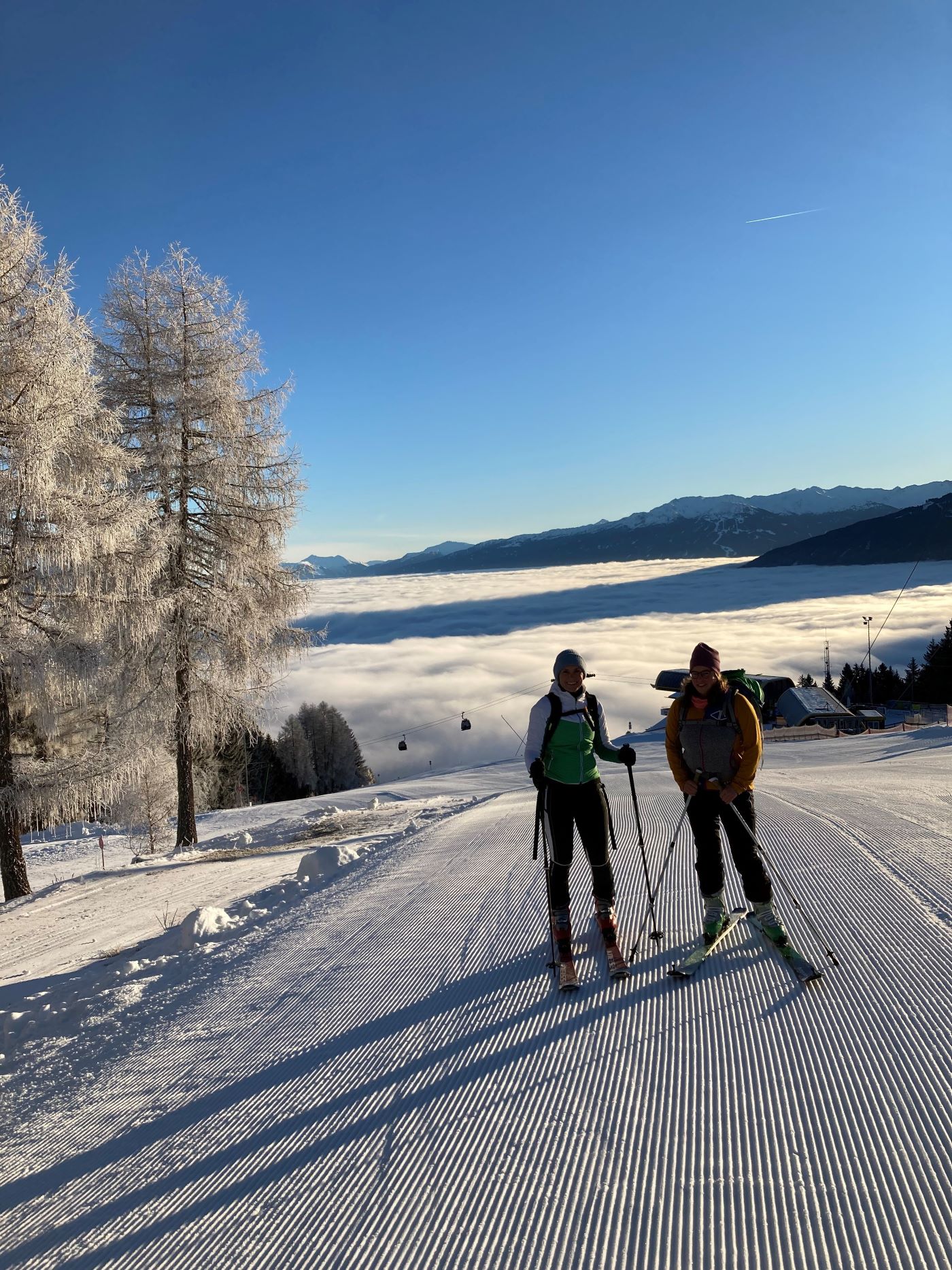
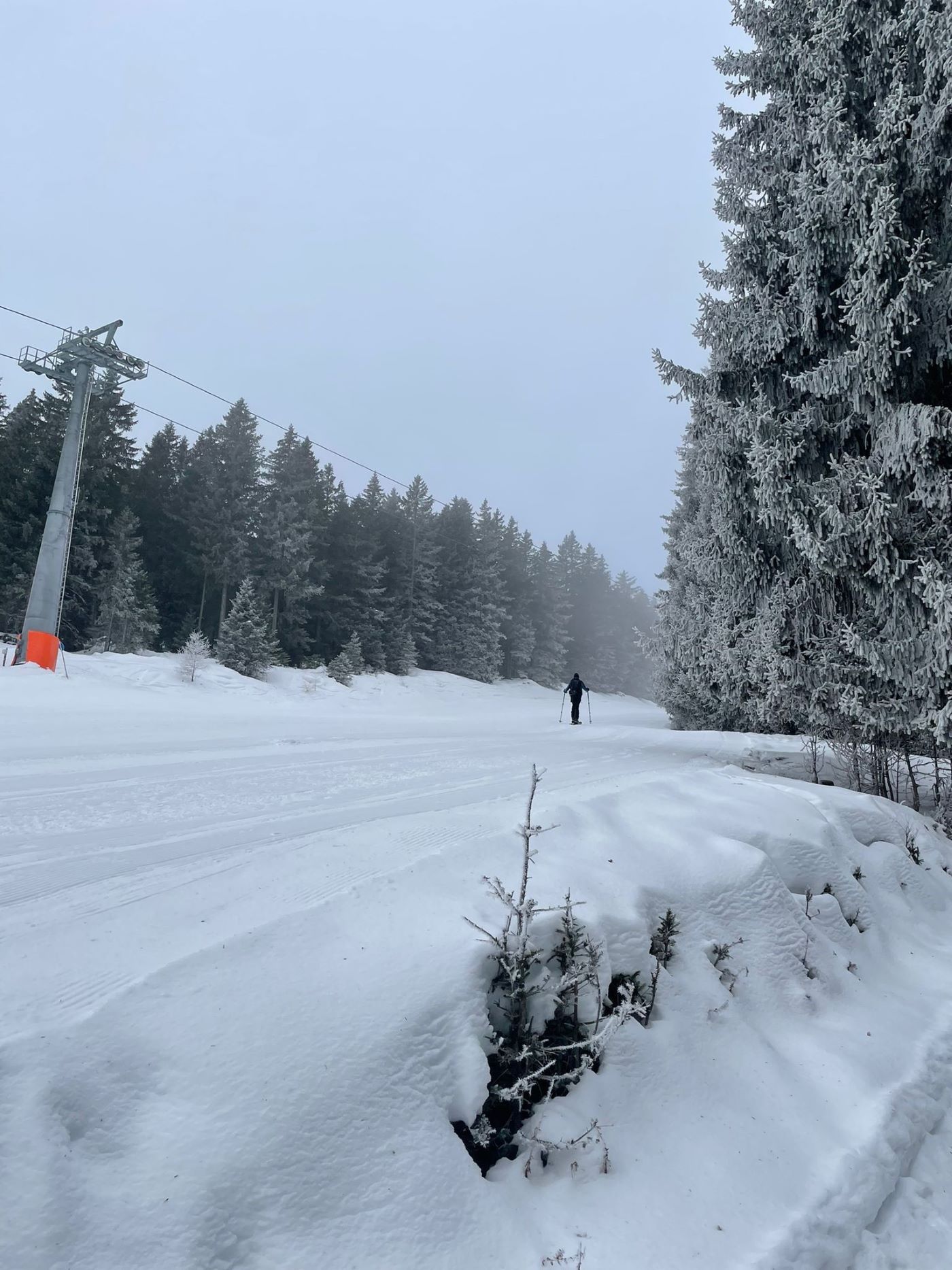
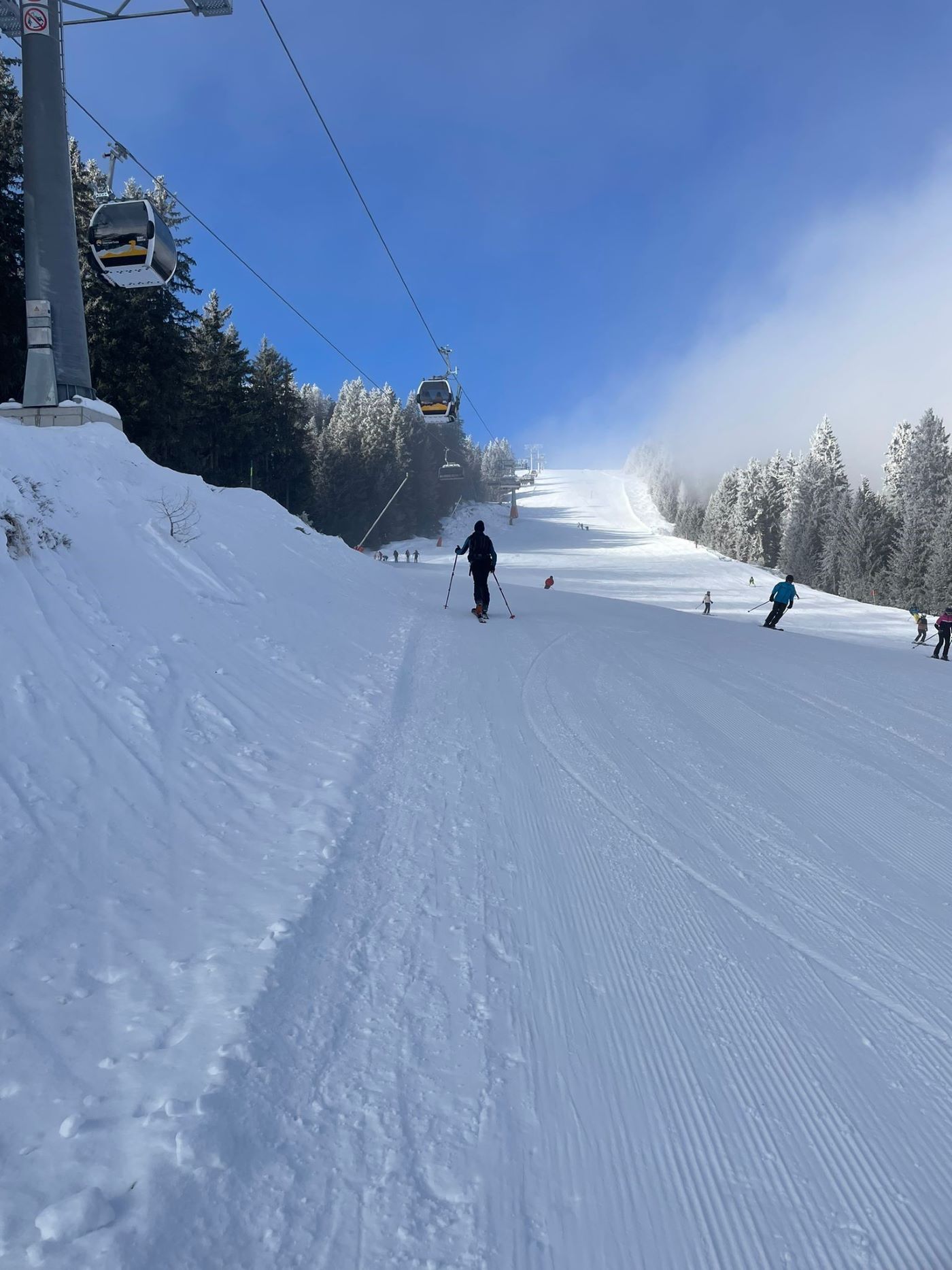
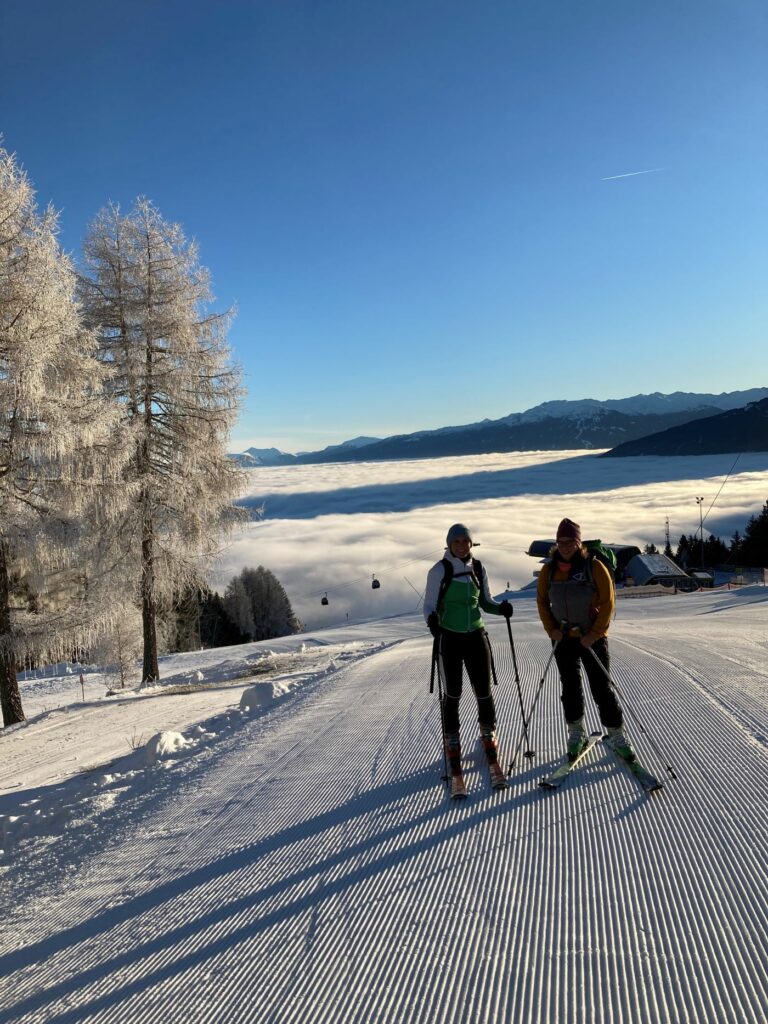
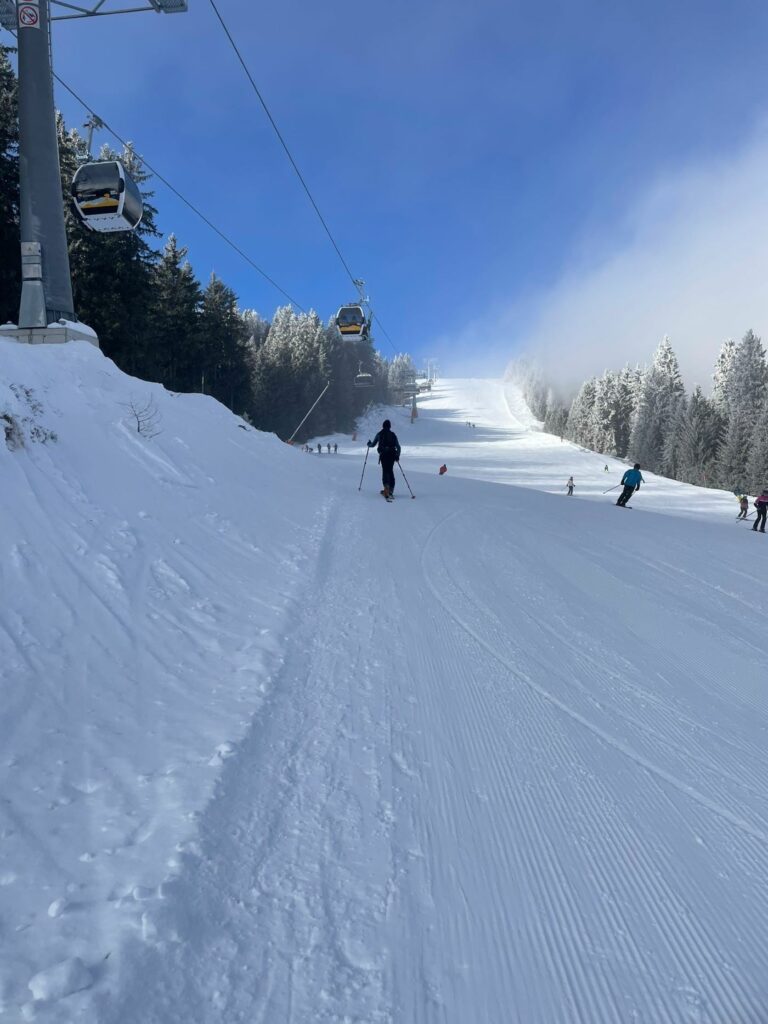
Ascending ski slopes on touring skis has been popular for more than 20 years and has become a trendy sport with growing numbers of participants. The focus is no longer simply on saving money on a lift ticket. It’s about physical activity and exercise in a safe environment without the risk of avalanches, and the opportunity to enjoy ski touring even with modest skiing skills, since the descent takes place on a groomed slope.
In ski resorts located near metropolitan areas, such as the greater Innsbruck area, the first conflicts over land use arose in the early 2000s. For the ski lift operators, liability issues arose in connection with, among other things, the grooming of ski slopes using winches, the triggering of avalanches, and the simultaneous use of the slopes by skiers descending and ascending.
Recommendation from ÖKAS
The ÖKAS, whose members include not only alpine clubs but also the ÖSV and the Cable Car Association, began addressing this issue as early as the early 2000s at the suggestion of the ÖAV. It has concluded that coexistence is possible through mutual consideration and that cable car operators face no liability risk as long as they follow the safety recommendations of their own trade association. The ÖKAS therefore recommends tolerating ski touring on the slopes.
Is it allowed to ascend ski slopes on touring skis?
The standard terms governing ski slopes in Austria and internationally—that is, the standard statements issued by the slope operator—include walking uphill. It also follows from FIS Rule 7 and, indirectly, from FIS Rule 6 that ascending ski slopes along the edge of the slope is permitted. Therefore, the answer to this question is clearly “yes.”
What should I keep in mind when going on a ski tour?
The ÖKAS’s 10 recommendations for ski tours apply.
They were developed in 2006 by experts from ÖKAS and are now widely recognized. Courts use them as a benchmark for the standard of care required in the event of accidents. Building on this, the State of Tyrol, in collaboration with stakeholder groups, developed the“Safe and Fair”ski touring model and published the“Tyrol Ski Touring Handbook.”It is important to note that ski tourers must observe nighttime closures as well as temporary closures during operating hours. The latter may occur due to avalanche danger, widespread icing, or maintenance work on snowmaking systems. These closures apply to both ascending and descending skiers.
10 Recommendations for On-Piste Tours
- Follow all warnings and local regulations.
- Comply with any closure of a slope or part of a slope. The use of snow grooming equipment—especially winches—or avalanche blasting, etc., can lead to life-threatening situations. Slopes may therefore be closed for safety reasons while work is in progress.
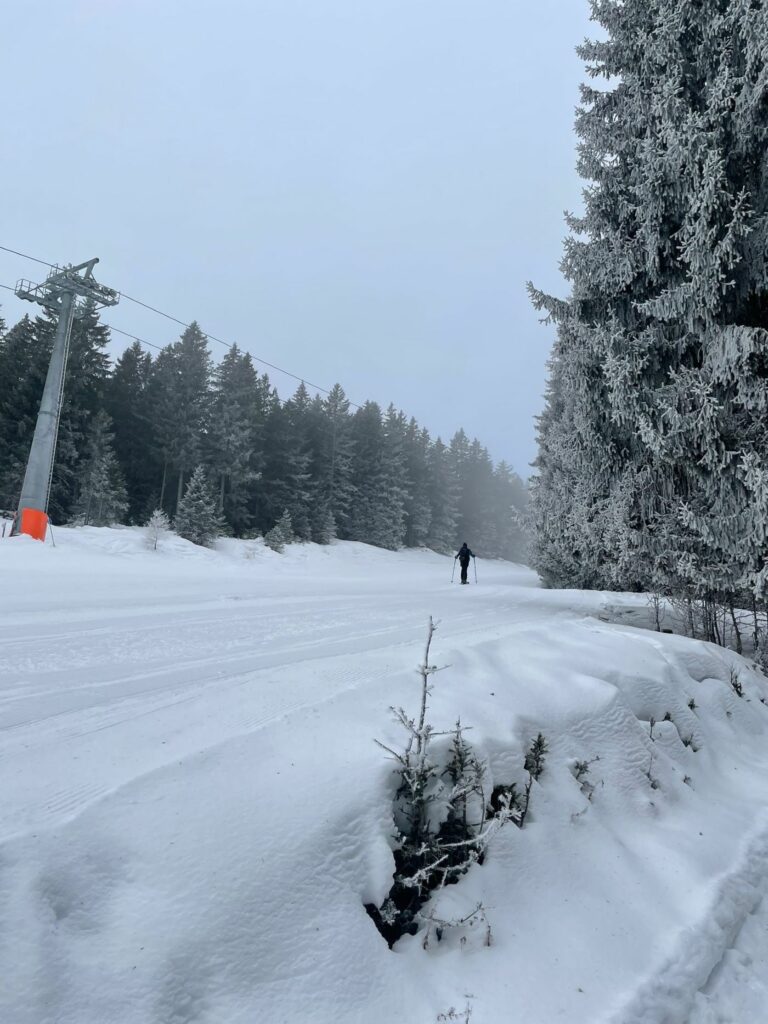
- Climb only at the edge of the slope and in single file.
- Cross the slope only in open areas and keep a safe distance from one another.
- Ski only on freshly groomed slopes in the outer areas.
Tracks that have frozen solid overnight can significantly impair the quality of the slopes. - Leave the slopes by 10:30 p.m. or by any other time specified by the ski lift operator.
- Be visible.
In the dark or when visibility is poor, use a headlamp, reflective clothing, etc. - On slopes designated specifically for ski touring, use only those slopes.
- Do not bring dogs onto the slopes.
- Use designated parking spaces and pay any parking fees.
Can a ski resort generally prohibit ski tours or charge a fee for them?
There is no provision in Austrian law that explicitly addresses this issue. To the extent that the cable car company owns the ski slope or holds an easement granting the right to use another party’s property as a ski slope, it may, in principle, prohibit access to these areas or charge a fee for such access. That said—and this is a major “BUT”—such a prohibition is often not permissible because there is a right to use the areas free of charge for ski touring. Such a right may arise from the acquisition by adverse possession of a so-called irregular easement in favor of a municipality or an alpine club through more than 30 years of use of an ascent route, from state laws such as Sections 1 and 5 of the Carinthian Law on Freedom of Passage in Mountainous Areas (1923), from Section 33 of the Forestry Act (“Freedom of Passage in Forests”), or from customary law. Surprisingly, there has been no court ruling on this matter in Austria to date, even though closures for ski tourers are purely a matter of private law and would have to be enforced by the cable car companies against each individual ski tourer through an action for injunctive relief. Anyone who disregards a private-law closure imposed by the cable car company is not committing a criminal offense and therefore cannot be “reported” by the cable car company or directly required to pay a fine. In any case, the courts would take local circumstances into account, which could certainly lead to varying outcomes.
The legal situation is clearer in some other countries, such as Bavaria. In 2016, the Bavarian Constitutional Court ruled that a trail closure imposed by the Zugspitzbahn for ski tourers was unlawful and contradicted the fundamental right to enjoy nature, as enshrined in Article 141, Paragraph 3, of the Bavarian Constitution. The Austrian Constitution does not contain such a fundamental right.
About the Author:
As a long-standing expert member, Dr. Robert Wallner is a key pillar of the ÖKAS and is always available to offer advice. From 1998 to 2000, he served as the “Alpine Public Prosecutor” in Innsbruck before working as Chief Public Prosecutor in Liechtenstein until his retirement in 2024. He is also a member of the FIS Legal Committee and the Disciplinary Committee of the Austrian Ski Federation, which underscores his expertise in international and national ski law.
At ÖKAS, he brings his extensive experience in various legal fields to bear and plays a central role in resolving complex legal issues. Of particular note is his commitment to organizing the 2024 Alpinforum. He played a key role in designing the program and moderated the event with professionalism, which contributed significantly to the forum’s success. Robert Wallner remains a key pillar of ÖKAS, particularly in the field of Alpine law.
Links & Publications:

- 10 FIS Rules
- “Safe & Fair” Trail Tours Brochure
- Ski Touring Guide: State of Tyrol
- bergwelt-miteinander.at
- PDF: Rules for Ski Tours from Bergwelt Tirol
- Subscription to *analyse:berg* Summer & Winter Magazine
- Alpine Primer Series of the Board of Trustees
- Contact:
Mag. Susanna Mitterer | Alpine Accident Statistics & Press Inquiries Österreichisches Kuratorium für Alpine Sicherheit, Olympiastr. 39, 6020 Innsbruck, susanna.mitterer@alpinesicherheit.at, Tel. +43 512 365451-13