This post is also available in:
On August 31, 2025, a man and his wife are attacked by cows directly in front of the Austriahütte on the Dachstein. The man dies, the woman is seriously injured. According to the ÖKAS accident database, this was one of five fatal accidents in the Austrian mountains between 2005 and 2025. Are cow attacks on the rise? Are the animals becoming more aggressive? Is it due to the behavior of hikers? Do we need more education or should the animals generally be fenced in? These are questions that Alpenverein Austria is now addressing in concrete terms following the tragic accident on the Dachstein. The symposium “Safe on mountains and alpine pastures – with and without dogs” on November 21, 2025 was just the beginning.
Christina Schwann
Editor analyse:berg, ecologist
Fritz Macher, 1st Chairman of Alpenverein Austria, knew the man and his wife who died in an accident in the summer in the immediate vicinity of the Austriahütte well. They were long-serving officials of Alpenverein Austria, honorary board members and, in the case of the woman, even a member of the federal committee. Both were experienced mountaineers and dog owners, and both knew how to behave respectfully towards grazing animals. Nevertheless, this dramatic accident occurred, in which the man died and the woman suffered serious injuries.
This accident shows that blanket judgments about the behaviour of hikers and alpine farmers alike are misplaced. However, it also shows that existing rules of conduct obviously do not go far enough or are not communicated well enough.
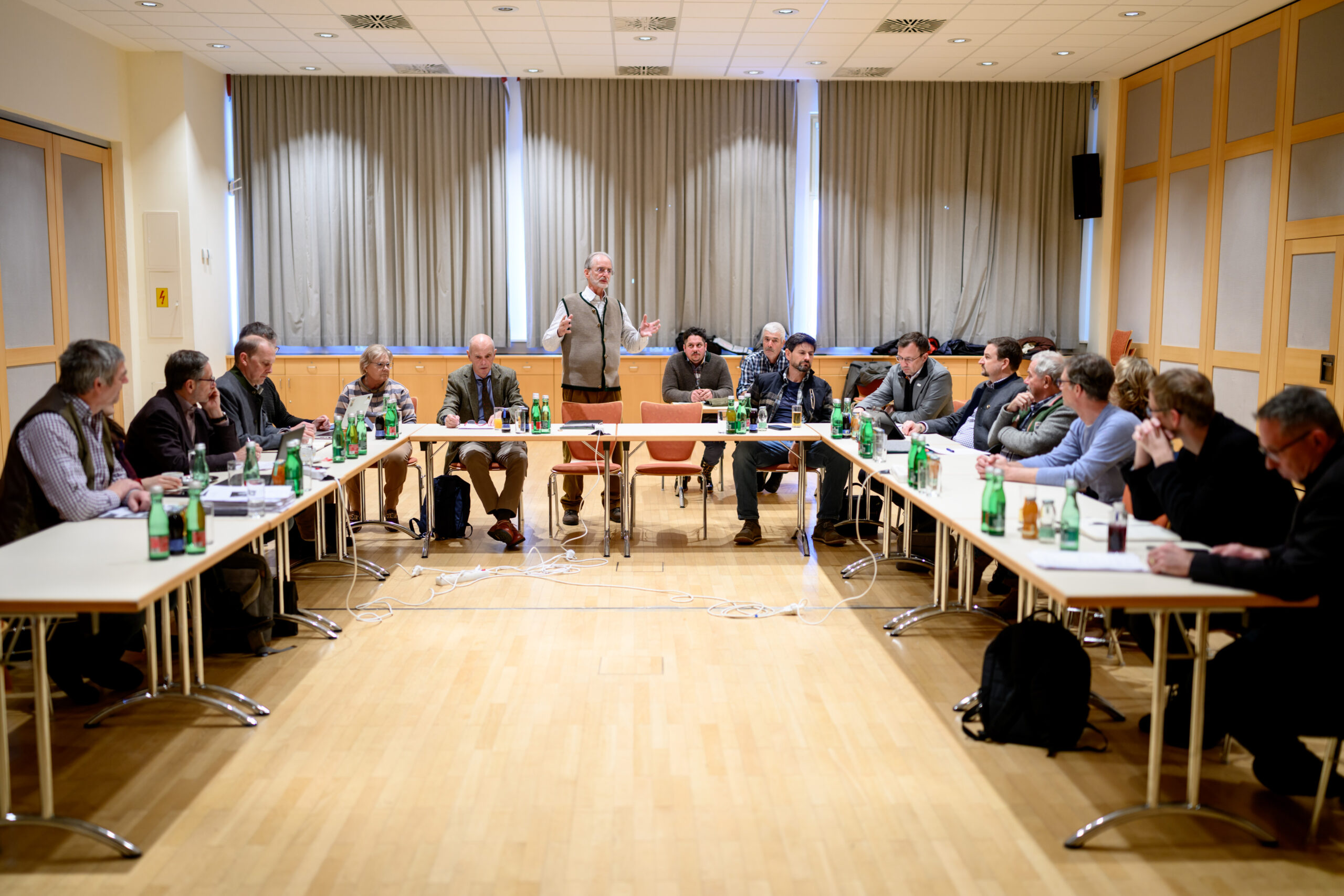
For this reason, a wide range of people were invited to the symposium in Ramsau am Dachstein: In addition to the son of the couple involved in the accident and representatives of the Alpine Association and the municipality of Ramsau, the president of the VAVÖ (Austrian Alpine Association), representatives of alpine farmers and agricultural marketing, a cattle trainer and farmer as well as the official veterinarian of the BH Lienz were also present – a statement was also submitted by the official veterinarian of the province of Tyrol. ÖKAS President Peter Paal was present and Peter Kapelari, consultant, mediator and expert on alpine infrastructure, who has extensive experience on the subject, including from a fatal cow attack in the Tyrolean Stubai Valley, gave a keynote speech.
This is custom heading element
The figures from the ÖKAS accident database
Peter Kapelari assumes that accidents are not only perceived to be increasing, but are also statistically verifiable. He uses the ÖKAS accident database as background information. An evaluation carried out by the Austrian Center for Bear, Wolf and Lynx in 2023 revealed the following: between 2005 and 2023, there were a total of 86 cow attacks on 112 people. 93 people were injured, 2 died as a result of the attacks and 17 were uninjured. In addition, there was one fatal accident in the Gastein Valley in 2024 and one on the Dachstein in summer 2025. All fatal accidents involved at least one dog. If you read the accident reports of the Alpine Police, the accidents with injured persons are clearly put into perspective. Many were injured “secondarily”, for example by stumbling or falling while fleeing. In some cases, provocative behavior by hikers towards grazing cattle led to accidents. Accidents at work caused by alpine farmers are also recorded in the database. This means that very often the cows were not responsible for the accident and did not show any aggressive behavior. In other incidents, however, extremely dangerous situations actually occurred with and without dogs.
–> You will be able to read more about this in the summer issue of analyse:berg 2026.
The Pinnistal case
Until the so-called “cow verdict” in 2014, there had been no criminal convictions in relation to cow attacks, and civil claims were almost always dismissed. However, according to Peter Kapelari, the Pinnistal case was quite different: following a fatal accident, the animal owner was found solely guilty at first instance. It was only in the second and third instance that the verdict was reduced and the victim was also awarded 50% of the blame.
Even though the farmer’s insurance company paid the recognized amount of damage of EUR 125,000, the alpine farmers were still very unsettled. According to Kapelari, a round table was convened for the first time with all relevant institutions (chambers, tourism, Alpine Association) as well as the provincial and federal governments to look for solutions together. And these discussions were very fruitful, as they resulted in the 10 rules of conduct for proper behavior on alpine pastures that are still in use today. Rules, folders and videos are available to everyone free of charge. In addition, an amendment to the Austrian Civil Code (§1320) has relieved the burden on alpine farmers in that livestock farming on alpine pastures is a traditional specialty and therefore visitors have a personal responsibility.
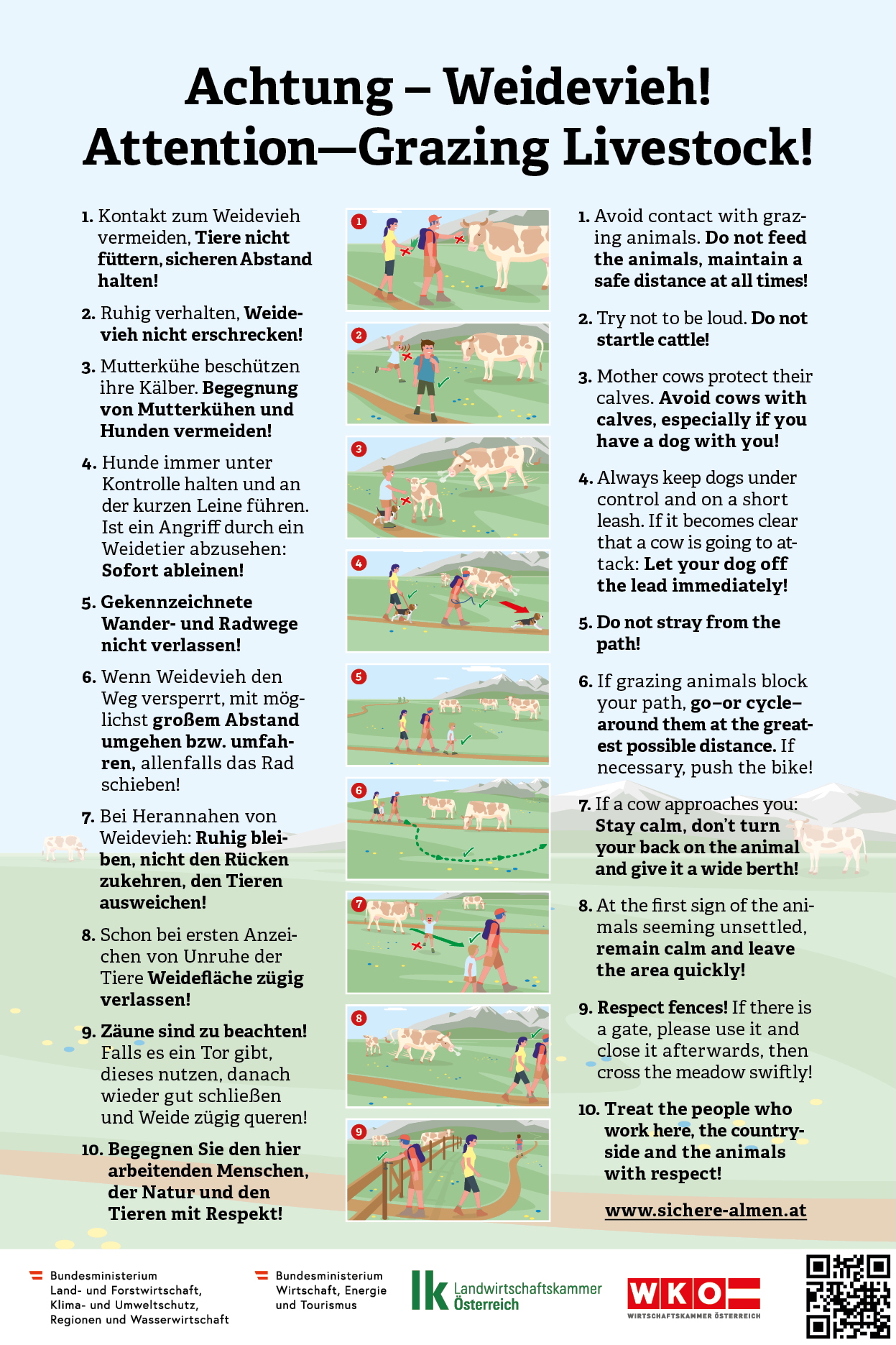
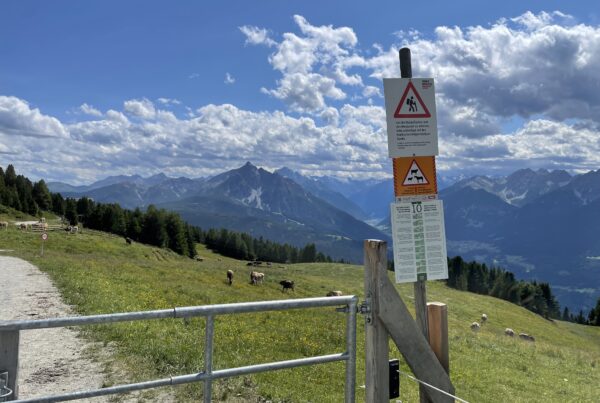
10 rules of conduct for correct behavior on alpine pastures
Source: sichere-almen.at
Although these rules have lost none of their validity, they may not go far enough for Kapelari, as the number of incidents on mountain pastures is increasing rather than decreasing.
Possible causes for increasing incidents on mountain pastures
Peter Kapelari outlines some possible causes for the sometimes very aggressive behavior of grazing cattle, which are then substantiated by the experts present:
- Changes in grazing animal husbandry
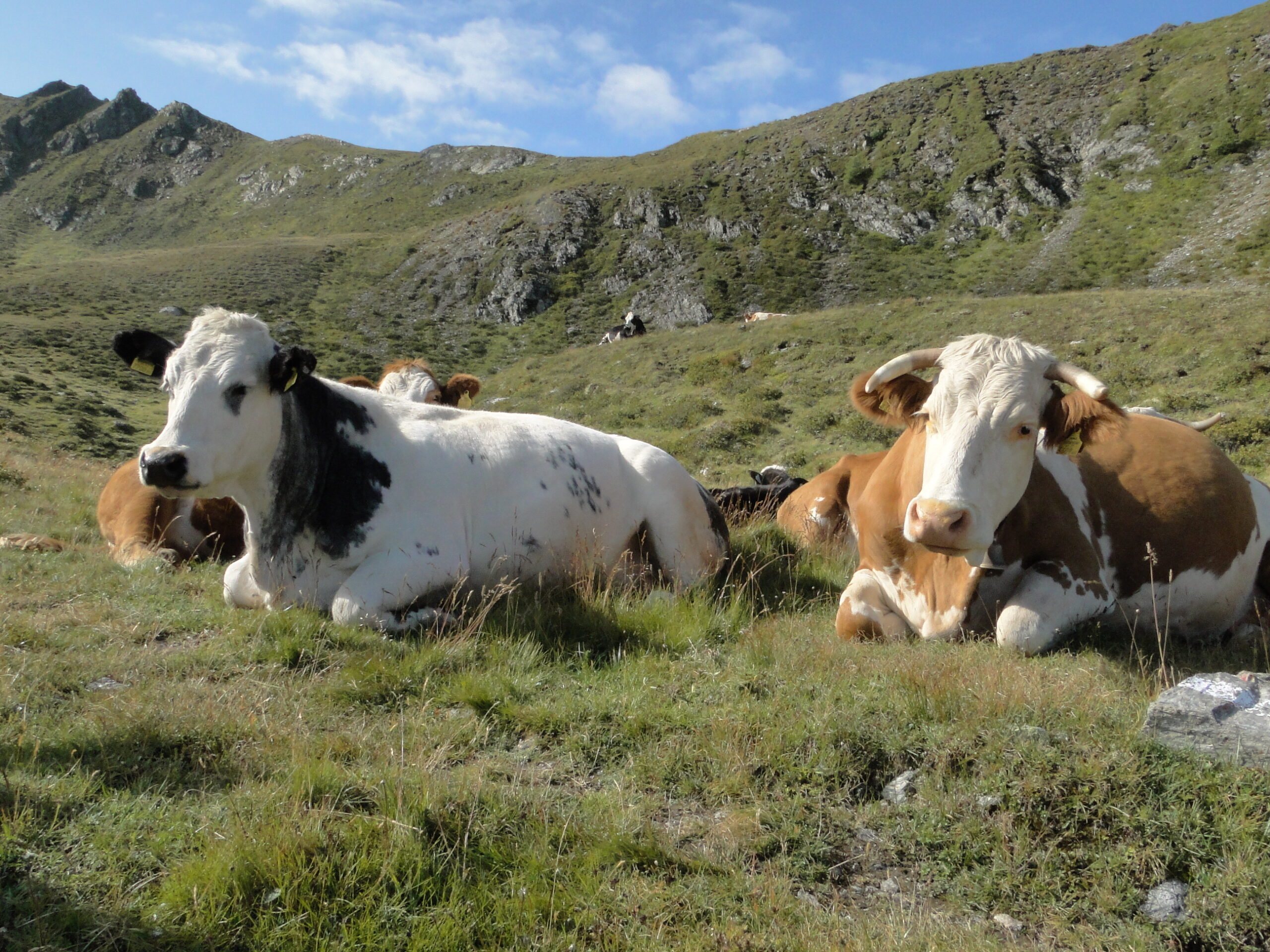
The switch to suckler cow husbandry and the changeover from tethering to loose housing could contribute to cows becoming “de-domesticated”, i.e. having less contact with humans and therefore being much more instinct-driven. And Kapelari is certain that the (mother) cow is clearly underestimated in comparison to the bull.
- Change in dog ownership
Kapelari suspects that not only are there many more hikers out and about, but also many more dogs. At the same time, the number of dogs on farms is decreasing. In addition, the “mindset” of dog owners has changed fundamentally: In the past, dogs were often kept as helpers for various tasks, but today they are primarily a family member and the question must be asked whether owners and dogs may sometimes lack the right training.
- Changes in society
At the same time, there are fundamental changes in society. The “compulsion to be active” in leisure time is increasing, while common sense, consideration and knowledge of nature have declined.
- Stress on grazing livestock due to other factors
Kapelari also mentions possible stress factors for grazing livestock due to climate change or the more frequent occurrence of large predators.
According to Kapelari, it is no wonder that the rifts between mountain pasture farmers and recreational users are becoming ever greater and that strict measures such as a general ban on dogs or the complete fencing in of grazing livestock are often demanded.
Statements by the experts present
The statements of the official veterinarians are interesting, as they also observe the “de-domestication” mentioned by Kapelari due to the changes in cattle farming. At the same time, they hold the farmers responsible, as they should know their animals so well that they do not send “problem animals” to the mountain pastures in the first place.
No one denies that mountain pastures represent an ancient cultural landscape, maintain biodiversity and are an elementary argument for tourism. Farmers rightly wish that their job “alpine pasture” is appreciated accordingly and as such given higher priority than uninhibited leisure sports. Everyone also agrees that tourism, which was invited to the symposium but did not take part, must be held accountable in order to avoid selling images of an alpine idyll that does not exist. Everyone agrees that the technical possibilities of communication must be exploited much better – from intelligent trail signs with integrated chips to digital information about suckler herds that can be taken into account when planning tours.
And even some of the 10 existing rules of conduct could do with a revision – for example with regard to the distance to grazing cattle. According to the cattle trainer and farmer present, this is always the main problem.
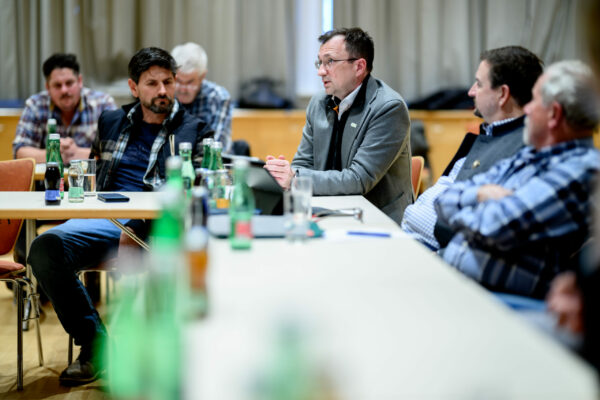
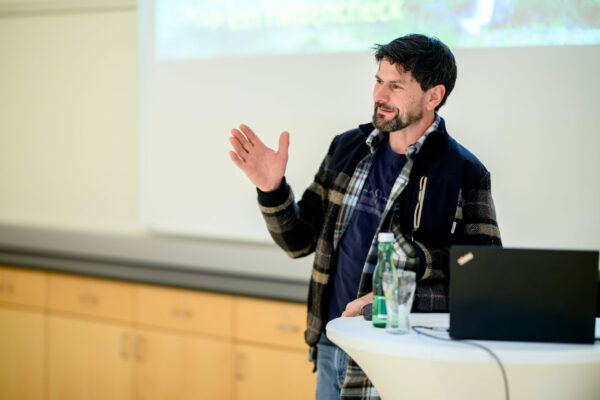
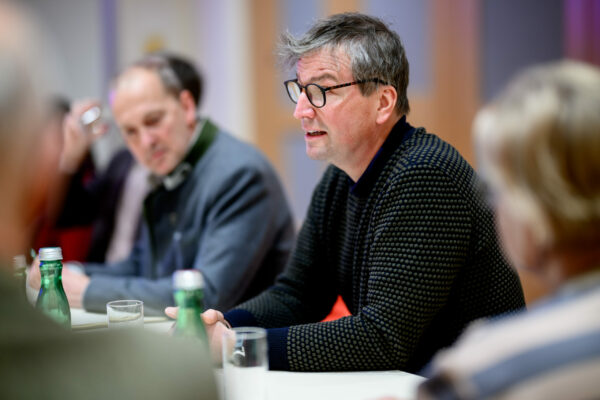
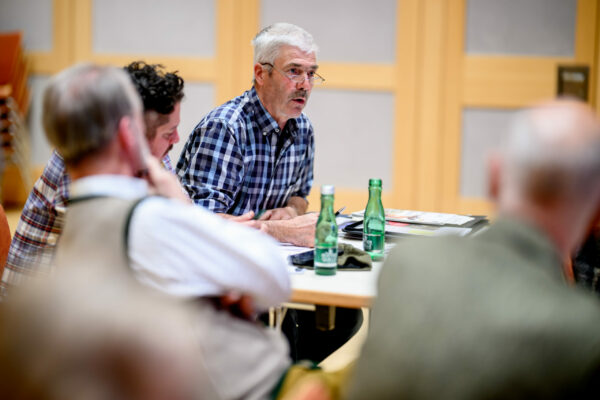
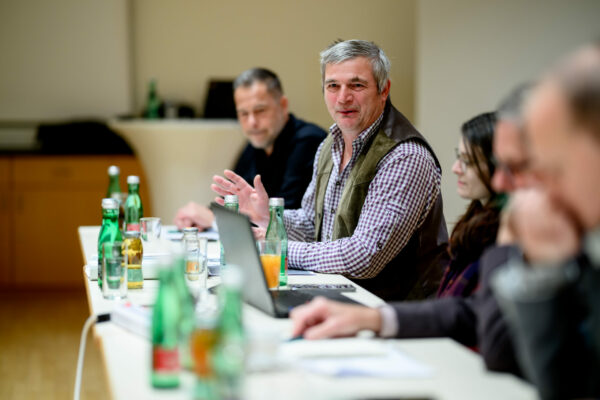
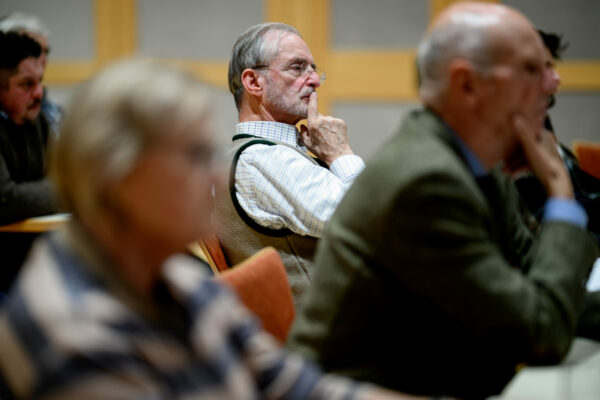
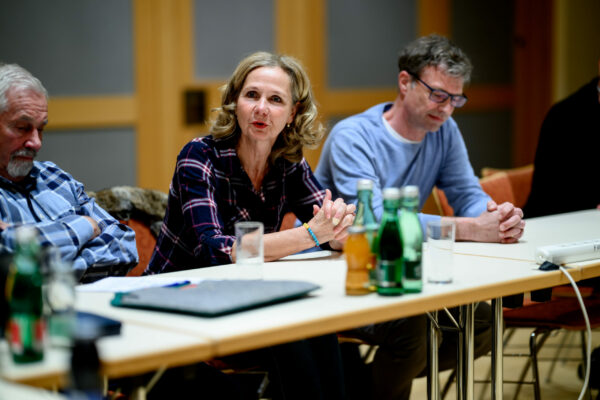
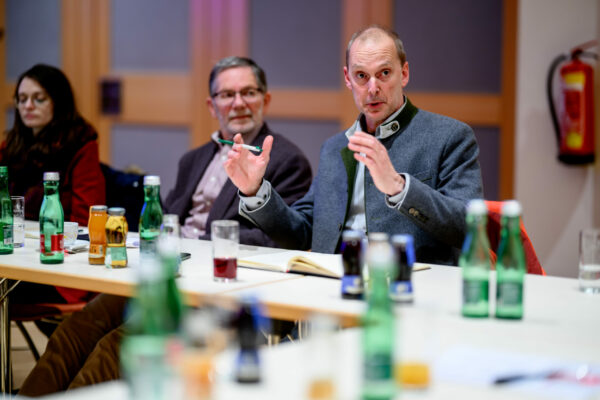
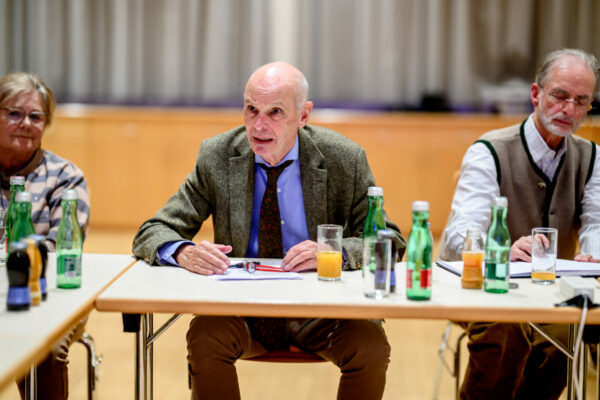

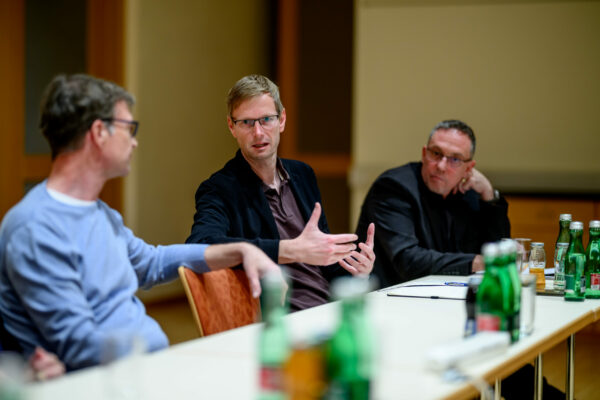
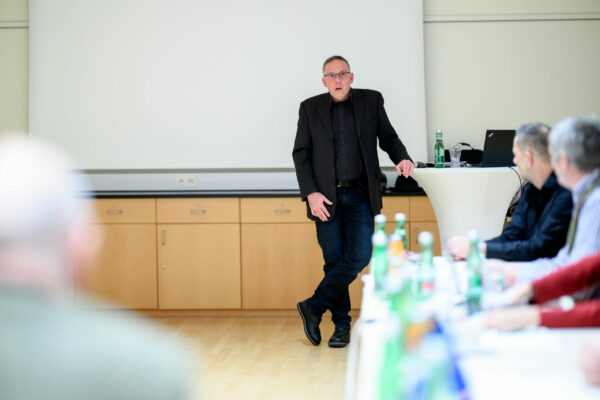
The statements were contributed by a wide range of experts. (You can see their names and functions by hovering over the image with the cursor.)
Photos: Imre Antal
Summary
Accidents involving grazing livestock occur time and again in Austria’s Alps. In relation to the number of recreational athletes, the number of injuries and fatalities is low, but it is undeniably an emotional issue, because there are few places where different interests in the natural environment clash as obviously as here. On the one hand, there are hikers and sportspeople who use the mountain pastures as a place of longing, as a balance to everyday life and/or as a sports facility. On the other hand, there are the alpine farmers who have been driving their cattle to the summer pastures for centuries and have thus created and continue to preserve a species-rich cultural landscape that significantly shapes the landscape of the Alps and is used by tourism.
Grazing livestock – especially mothers – seem to feel disturbed or harassed by the ongoing disturbance caused by recreational users. Presumably this is particularly the case when there are no alternative routes, the distance is too short, dogs are being carried or the disturbance can no longer be assessed because recreational users are not only on the marked hiking trails. A lack of knowledge on the part of recreational users, dogs with little or no training, ignoring information signs and indeed disrespect towards the landowner/alpine farmer and the cow itself (coming too close, disturbing the cow’s “privacy”, attacking, taking photos…) can lead to dangerous situations.
Conclusion
The symposium achieved exactly what it was supposed to: The representatives of the various institutions came together and were heard. The focus was not on apportioning blame, but on working towards joint solutions. The discussion has thus begun and will continue in further steps. The aim is to jointly develop concrete measures and initiate the best possible communication via all conceivable channels.
As an independent platform, the ÖKAS will take on a moderating role and ensure the necessary external communication.
The previously announced article in analyse:berg Summer 2026 will inform you about concrete further steps.
Links & Publications:

- This article is published in the ÖKAS trade magazine analyse:berg summer 2025 (observation period: 01.11.2023 to 31.10.2024).
- Editor-in-chief: Peter Plattner(peter.plattner@alpinesicherheit.at)
- Subscription magazine analyse:berg Winter & Summer
- Alpine Primer Series of the Board of Trustees
- Alpinmesse / Alpinforum 2025
- Contact ÖKAS:
Susanna Mitterer, Österreichische Kuratorium für Alpine Sicherheit, Olympiastr. 39, 6020 Innsbruck, susanna.mitterer@alpinesicherheit.atTel. +43 512 365451-13